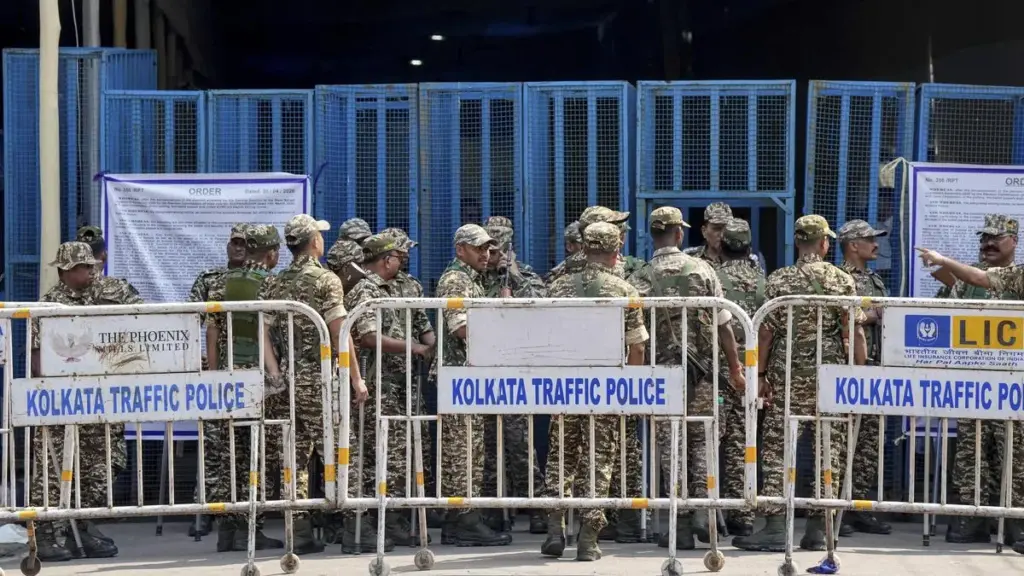
The West Bengal Assembly elections have seen unprecedented voter turnout, raising the stakes for major political parties. With TMC and BJP vying for dominance, the results will shape future governance.
The recent West Bengal Assembly elections have garnered attention due to their record-breaking voter turnout, marking the highest participation since Independence. Held in two phases on April 23 and April 29, 2026, these elections have increased the stakes for both the Trinamool Congress (TMC) and the Bharatiya Janata Party (BJP).
Why does this matter? The first phase recorded a remarkable 92.8% voter turnout, while the second phase followed closely with 91.47%. This level of engagement is significant in a state where political dynamics have been intensely competitive.
In this context, the TMC, led by Mamata Banerjee, aims to retain its power after five years in governance. Meanwhile, the BJP seeks to achieve a historic win in West Bengal—a state that has traditionally leaned towards leftist politics but has seen a shift in recent years.
This election was not without controversy. Issues of electoral malpractices emerged, prompting a repolling for the Falta Assembly seat scheduled for May 21, 2026. Such incidents raise questions about the integrity of the electoral process and how they may affect public trust in political institutions.
The backdrop of this electoral battle includes a decrease in total electorate from 7.66 crore to 6.82 crore, attributed to the SIR exercise aimed at cleaning up voter rolls. This reduction could influence party strategies and campaign efforts moving forward.
The Election Commission of India has taken steps to ensure transparency during vote counting by appointing 165 additional counting observers and 77 police observers. These measures reflect an effort to uphold electoral integrity amidst rising concerns over malpractices.
The results will be counted on May 4, 2026, and both major parties are poised for critical outcomes that could redefine their political futures. The CPI(M) and Congress hope to reclaim relevance after being largely sidelined in previous elections.
The stakes couldn’t be higher as these results will not only determine who governs West Bengal but also set the tone for future political alignments in this crucial state.