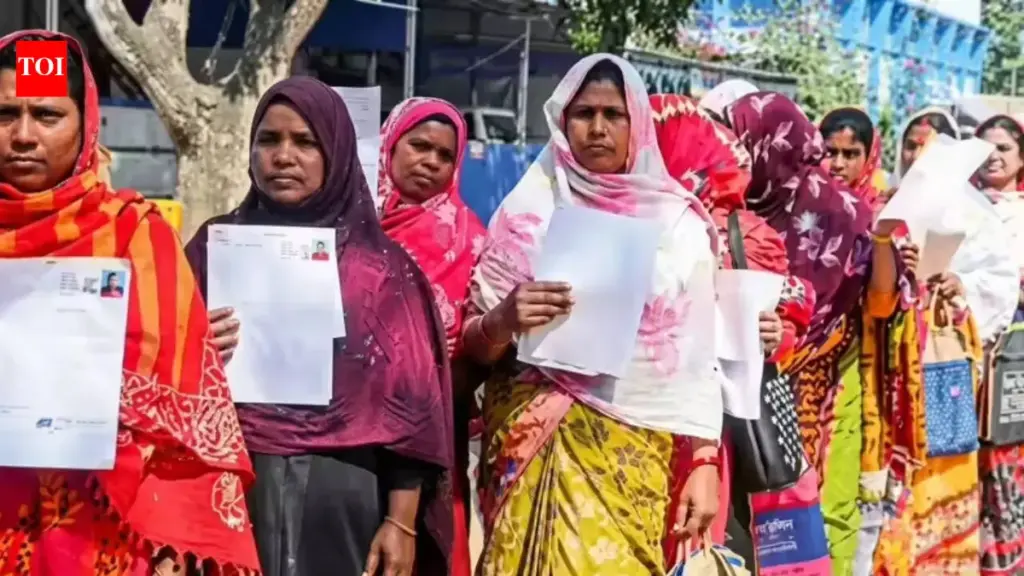
The West Bengal Assembly Election 2026 marks a significant change in the voting process, moving from eight phases to two. This shift is accompanied by increased security measures.
Who is involved
The West Bengal Assembly Election 2026 is poised to be a pivotal moment in the state’s political landscape. Historically, the elections in West Bengal have been characterized by a lengthy and complex voting process. In 2021, for instance, the polls were conducted over eight phases, a method that was often criticized for its logistical challenges and security concerns. This year, however, the Election Commission has decided to streamline the process significantly.
In a decisive shift, the upcoming elections will take place in just two phases on April 23 and April 29, 2026. This change is expected to simplify the electoral process and enhance voter participation. Gyanesh Kumar, an official from the Election Commission, noted, “With regard to the West Bengal elections being held in two phases instead of the previous eight, the commission has held detailed deliberations.” This reduction in phases is seen as a response to both logistical issues and the need for more efficient management of the electoral process.
To ensure the integrity and security of the elections, the Union Home Ministry will deploy 480 companies of paramilitary forces across the state. This move underscores the government’s commitment to maintaining law and order during the election period. The deployment of such a significant number of security personnel is indicative of the heightened concerns regarding electoral violence and the need for a secure voting environment.
In terms of logistics, the first phase will cover 152 assembly constituencies across 16 districts, while the second phase will encompass 142 constituencies in seven districts. This distribution aims to facilitate a smoother voting experience for the 17.4 crore eligible voters in West Bengal. Additionally, the counting of votes is scheduled for May 4, 2026, marking a crucial moment in determining the future political landscape of the state.
Another significant aspect of the upcoming elections is the recent update to the electoral rolls. Reports indicate that 63 lakh names have been deleted from the electoral roll, a move that Gyanesh Kumar described as essential for ensuring the purity of the electoral process. He emphasized, “Pure electoral rolls are the bedrock of free and fair elections.” This effort to clean up the electoral rolls is expected to enhance the credibility of the election results.
As the election dates approach, the last date for filing nominations for the first phase is set for April 6, 2026, with the last date for withdrawal of nominations on April 9, 2026. These deadlines are critical for candidates and parties as they prepare for the electoral battle ahead. The streamlined process and increased security measures are likely to influence the strategies of various political parties as they gear up for the elections.
The shift to a two-phase election process in West Bengal represents a significant change in the state’s electoral dynamics. It reflects a broader trend towards simplifying the electoral process while addressing security concerns. As the state prepares for the elections, the focus will be on how these changes impact voter turnout and the overall political landscape.
Details remain unconfirmed regarding the full implications of these changes, but the upcoming elections are set to be a crucial test for the political parties involved and the electorate of West Bengal.