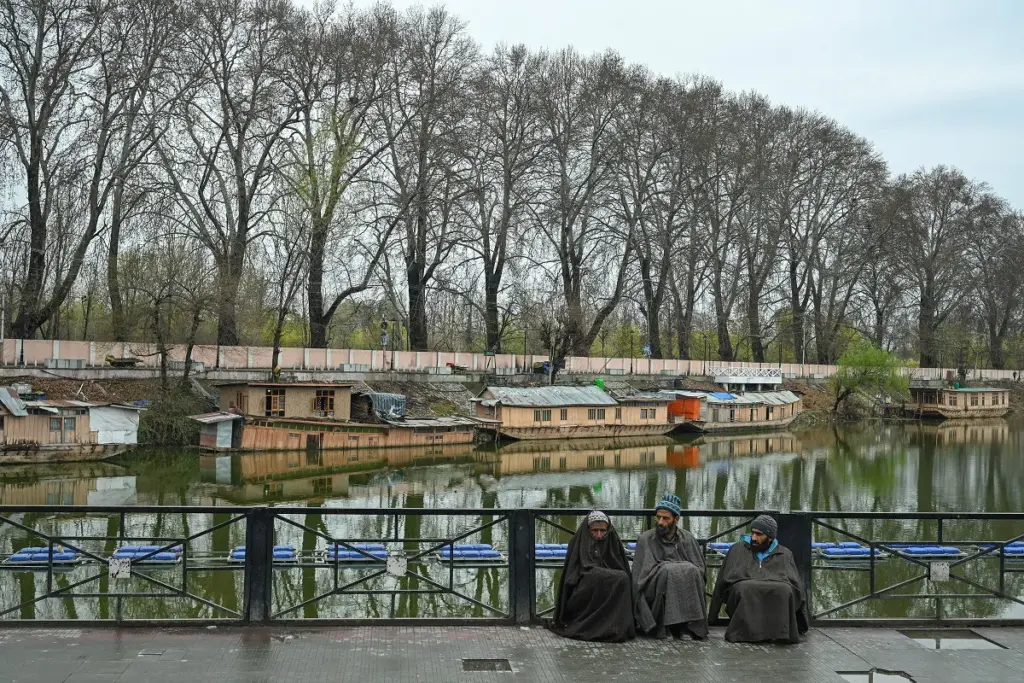
Srinagar experienced fresh snowfall and rainfall on March 17, 2026, with weather conditions expected to change in the coming days.
On March 17, 2026, Srinagar and several upper reaches of Kashmir received fresh snowfall, marking a significant weather event for the region. This development came as the plains recorded rainfall for the third consecutive day, contributing to a wet spell that has affected daily life and agricultural activities.
As of March 17, the weather in Srinagar showed a maximum temperature of 14.9°C and a minimum of 4.4°C. In contrast, Jammu recorded a warmer maximum of 25.7°C and a minimum of 11.5°C, while Gulmarg experienced a chillier maximum of 4.2°C and a minimum of -3.4°C. Pahalgam also reported a maximum temperature of 12°C and a minimum of -2.2°C.
The weather forecast indicates that conditions are likely to remain partly cloudy with intermittent light rain in the plains and light snowfall over higher elevations until March 20, 2026. Moderate to heavy snowfall is expected in some upper reaches of the Chenab Valley and parts of South Kashmir during this period.
Travelers and transporters have been advised to plan their movements carefully between March 18 and March 20 due to the anticipated weather conditions. Thunderstorms accompanied by gusty winds, with speeds of 40 to 50 km/h, are also possible during this time.
Farmers in the region have been urged to suspend agricultural operations between March 18 and March 20, 2026, as the expected wet weather could hinder farming activities. This advisory highlights the impact of weather on local agriculture, which is a vital part of the economy.
Looking ahead, the weather is expected to improve, with generally dry conditions likely from March 21 to March 25, 2026. However, another spell of cloudy weather is anticipated between March 26 and March 28, 2026, which may bring light rain in the plains and light snowfall over higher reaches.
This sequence of weather events is crucial for residents and travelers in the region, as it affects daily routines, travel plans, and agricultural practices. The ongoing changes in weather patterns underscore the need for preparedness and adaptability among those living in and visiting Kashmir.