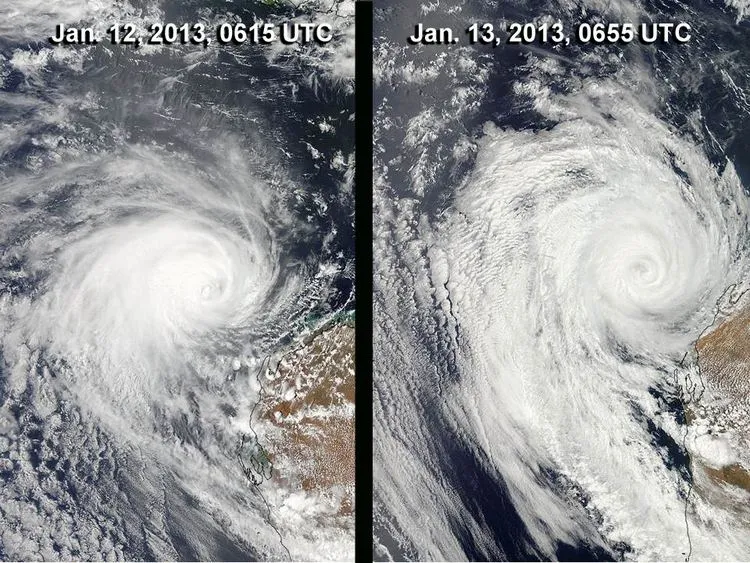
Tropical Cyclone Narelle has caused a striking red sky in Western Australia due to dust storms. This phenomenon has significant implications for the region.
On March 27, 2026, Tropical Cyclone Narelle made landfall in Western Australia, bringing with it destructive winds and an unusual atmospheric phenomenon. As the cyclone approached, the sky above the region turned a startling blood-red, captivating and alarming residents alike.
The cyclone, which peaked as a Category 3-4 severe tropical cyclone, vacuumed up iron-rich dust from the Australian outback. This dust, high in iron oxide, reflected red light, creating an eerie crimson daylight that was particularly visible in Shark Bay and Denham.
As the storm intensified, winds exceeded 125 kilometres per hour, causing significant disruptions. Visibility in the Gascoyne region dropped to near zero due to the thick dust storm, leading to hazardous conditions for residents and travelers.
AccuWeather noted, “NO, that’s not a filter! The sky turned an eerie shade of red in Western Australia as dust filled the air ahead of Tropical Cyclone Narelle.” This striking visual quickly spread online, igniting discussions about the unusual weather event.
Residents reported that daylight was erased within minutes, with many experiencing the air becoming thick with dust. The intense winds not only contributed to the dramatic sky but also caused a significant reduction in air quality.
Tropical Cyclone Narelle is notable for being only the third storm in recorded history to make landfall on three separate Australian coastlines. This highlights the cyclone’s unusual path and the widespread impact it has had across the region.
The phenomenon of the red sky serves as a reminder of the powerful forces of nature and their ability to alter our environment dramatically. The dust storms triggered by the cyclone have raised concerns about air quality and health impacts for those living in affected areas.
As the situation develops, authorities continue to monitor the effects of Tropical Cyclone Narelle. Details remain unconfirmed regarding the full extent of damage and the long-term implications for the region.
This sequence of events matters significantly for the communities involved, as they navigate the immediate challenges posed by the cyclone and the subsequent atmospheric changes. The striking visuals and the discussions they have sparked underscore the intersection of natural phenomena and human experience.