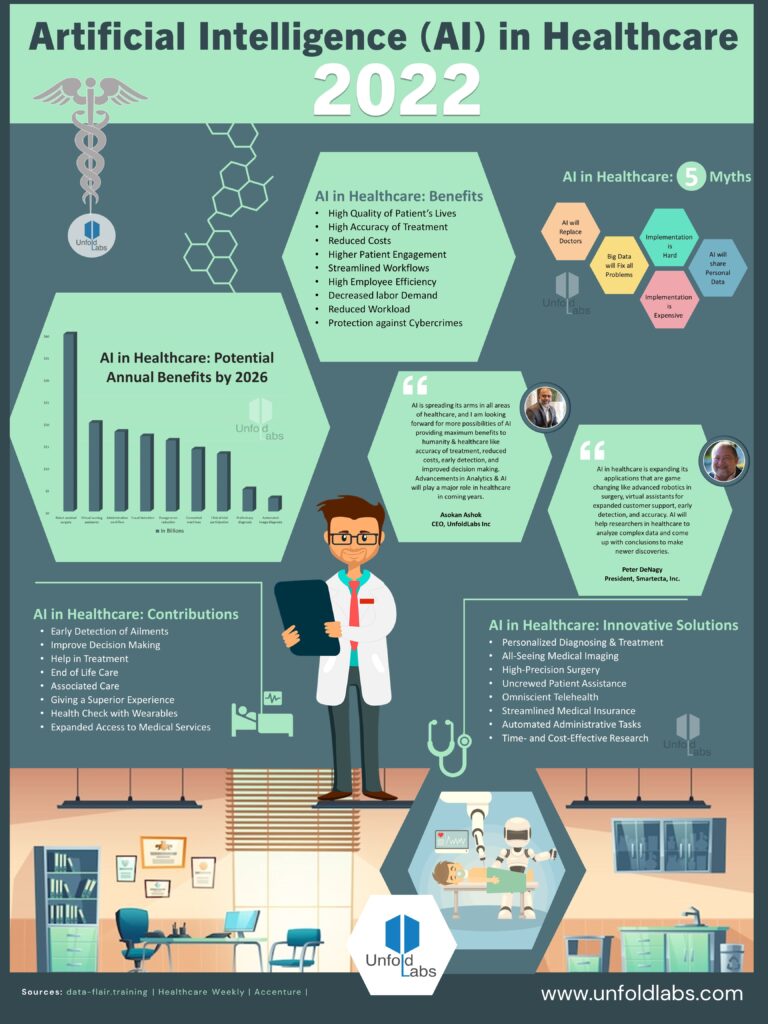
Introduction Artificial Intelligence (AI) is increasingly becoming a cornerstone in the field of healthcare, fundamentally changing how patients are diagnosed and treated. As technological advancements continue to rise, the integration of AI in healthcare has the potential to improve patient outcomes, enhance the efficiency of healthcare services, and reduce costs. The importance of AI in
Introduction
Artificial Intelligence (AI) is increasingly becoming a cornerstone in the field of healthcare, fundamentally changing how patients are diagnosed and treated. As technological advancements continue to rise, the integration of AI in healthcare has the potential to improve patient outcomes, enhance the efficiency of healthcare services, and reduce costs. The importance of AI in healthcare cannot be understated, as it promises to lead to a more precise and personalized approach to medical care.
Current Applications of AI in Healthcare
AI applications in healthcare are vast and varied. They range from predictive analytics that identify potential health risks before they become critical to AI-powered diagnostic tools that assist healthcare professionals in interpreting medical images. For instance, a recent study from Stanford University found that an AI system achieved an accuracy of over 94% in diagnosing pneumonia from chest X-rays, outperforming human radiologists in some cases.
Moreover, virtual health assistants and chatbots are becoming common for managing routine inquiries and providing 24/7 patient support. Hospitals are now using AI algorithms to manage inventory and schedule surgery based on real-time analysis of patient data. Additionally, AI technology is improving drug discovery processes by analyzing large datasets at an unprecedented speed, significantly reducing the time and cost required to bring medications to market.
Challenges and Ethical Considerations
Despite the benefits, the implementation of AI in healthcare is not without challenges. Concerns regarding data privacy, ethical considerations related to patient consent, and the potential for algorithmic bias are critical issues that need to be addressed. Regulatory bodies are working on creating guidelines and frameworks to ensure that AI systems are safe and reliable, but there is still a long way to go.
Healthcare practitioners must balance the integration of AI technology with the need to preserve the human touch in patient care. Training programs and forums for healthcare professionals are essential to keep them updated on the latest AI advancements and to ensure they are equipped to use these technologies effectively.
Conclusion
The future of AI in healthcare looks promising. As technologies continue to evolve, healthcare systems across the globe must adapt and embrace the changes brought forth by AI. This integration not only has the potential to enhance efficiency but also promises to tailor treatments to individual patients, improving overall health outcomes. Predictions suggest that by 2026, the AI in healthcare market will reach a valuation of over $37 billion, emphasizing the urgent need for healthcare providers to innovate and integrate AI into their practices.
In summary, AI in healthcare represents a revolutionary shift that could redefine the landscape of medical care, making it imperative for stakeholders to navigate its challenges while harnessing its transformative power for the greater good.