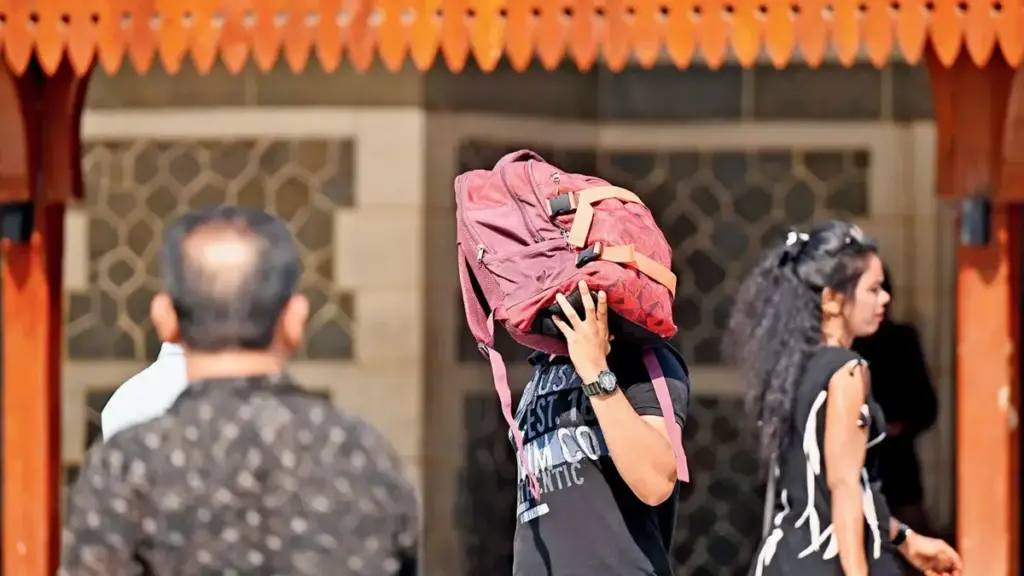
Mumbai has experienced a notable increase in temperatures, marking the earliest heatwave of the season in over a decade. The IMD has issued warnings as conditions worsen.
Temperature Trends in Mumbai
Mumbai has long been known for its tropical climate, typically characterized by warm temperatures and high humidity levels. However, prior to recent developments, residents and meteorologists expected a more moderate weather pattern as the city transitioned into the spring season. Historically, temperatures in March hover around 32 degrees Celsius, providing a comfortable environment for the city’s inhabitants.
Recent Changes in Temperature
On March 9, 2026, Mumbai experienced a significant shift when the maximum temperature soared to 38.4 degrees Celsius, marking the earliest heatwave of the season in at least a decade. This spike was not an isolated incident; the India Meteorological Department (IMD) recorded even higher temperatures in specific areas, such as 42.5 degrees Celsius at Ram Mandir and 41.7 degrees Celsius at Vikhroli. The IMD subsequently issued a heatwave warning for Mumbai, indicating that temperatures were expected to remain elevated for the week ahead, with forecasts predicting 39 degrees Celsius on March 9 and 37 degrees Celsius on March 10.
Immediate Effects on Residents
The sudden rise in temperatures has had immediate effects on the residents of Mumbai. With the minimum temperature recorded around 24 degrees Celsius, many are feeling the impact of the heat, especially those without access to adequate cooling systems. Humidity levels, which ranged between 18% and 34%, have further exacerbated the discomfort, making the heat feel more oppressive. The IMD’s yellow warning for Mumbai and surrounding areas, including Thane, Palghar, and Navi Mumbai, has heightened concerns about public health and safety as the city grapples with the heatwave.
Expert Perspectives on the Situation
Experts have weighed in on the recent temperature surge, attributing the spike to anticyclonic circulation in the Arabian Sea near south Gujarat and neighboring areas, including Mumbai. Sushma Nair, a senior scientist at IMD Mumbai, noted, “The spike in temperatures is attributed to the anticyclonic circulation in the Arabian Sea near south Gujarat and neighboring areas including Mumbai.” This explanation underscores the influence of broader climatic patterns on local weather conditions, highlighting the interconnectedness of regional climates.
Looking Ahead
As temperatures in Mumbai continue to hover around 35 degrees Celsius for most of the week, residents are urged to take precautions against heat-related illnesses. The IMD’s warnings serve as a reminder of the potential dangers posed by extreme weather conditions, particularly for vulnerable populations. With the city facing its first heatwave of the season, public health officials are likely to monitor the situation closely to mitigate any adverse effects on the community.
The recent surge in temperatures in Mumbai marks a significant shift in the city’s weather patterns, prompting concerns and warnings from meteorological authorities. As the heatwave continues, the impact on daily life and public health will be closely observed, with experts advocating for awareness and preparedness among residents.