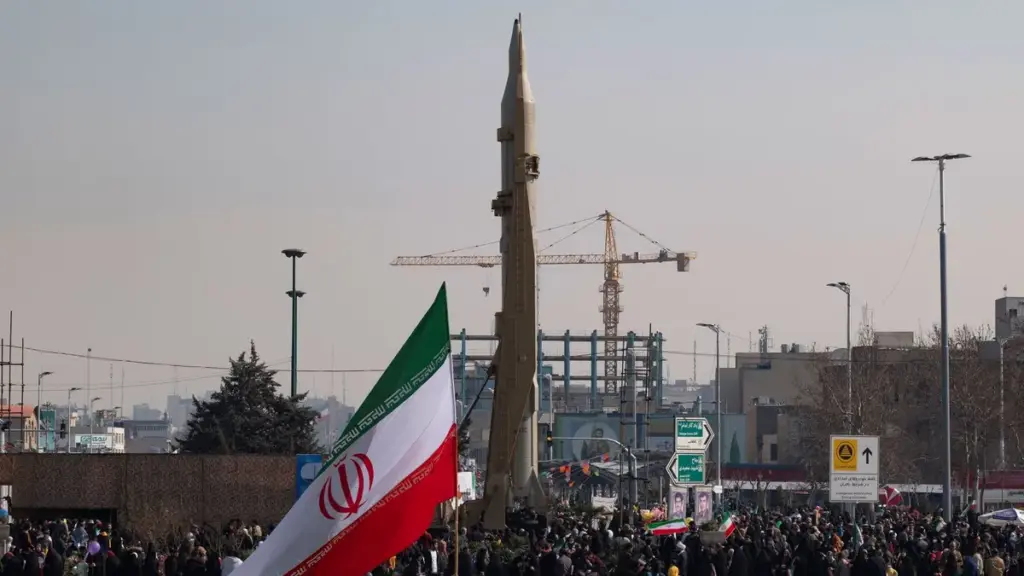
Iran has reportedly launched the first Sejjil ballistic missiles, marking a significant escalation in the ongoing regional conflict with Israel and the United States.
What observers say
“Iran has reportedly launched the first Sejjil ballistic missiles in its latest wave of attacks, marking a significant escalation in the ongoing regional conflict,” an unnamed military analyst stated, highlighting the gravity of the situation.
The Sejjil missile, a solid-fuel medium-range ballistic missile, is capable of reaching distances of approximately 2,000 to 2,500 kilometres. This capability places a significant portion of the region within its striking range, raising concerns among neighboring countries and international observers alike.
Known for its agility, the Sejjil has been nicknamed the “dancing missile” due to its ability to manoeuvre at high altitude, potentially evading missile defense systems such as Israel’s Iron Dome. This feature adds a layer of complexity to the already tense military landscape in the region.
The missile measures about 18 metres in length, with a diameter of around 1.25 metres and a launch weight of approximately 23,600 kilograms. It has a payload capacity of roughly 700 kilograms, allowing it to carry significant explosive power. Observers note that the missile’s advanced design reflects Iran’s ongoing efforts to enhance its military capabilities.
Work on the Sejjil system began in the early 1990s, with the first test launch conducted in 2008. Since then, Iran has reportedly developed multiple variants of the Sejjil system, including the Sejjil-2 and possibly the Sejjil-3, indicating a commitment to advancing its missile technology.
The recent launch marks the first time Iran has used the Sejjil missile to target Israeli and US-linked positions since the conflict began on February 28, when Israel and the United States initiated strikes on Iranian nuclear and military facilities. The situation has escalated rapidly, with reports indicating significant casualties, including 223 women and 202 children, contributing to a total of approximately 1,300 casualties in Iran.
As the conflict enters its third week, the implications of Iran’s missile capabilities are becoming increasingly apparent. The international community is closely monitoring the developments, with fears that further escalation could lead to broader regional instability. Details remain unconfirmed regarding the full impact of the missile launches and the responses from Israel and the United States.