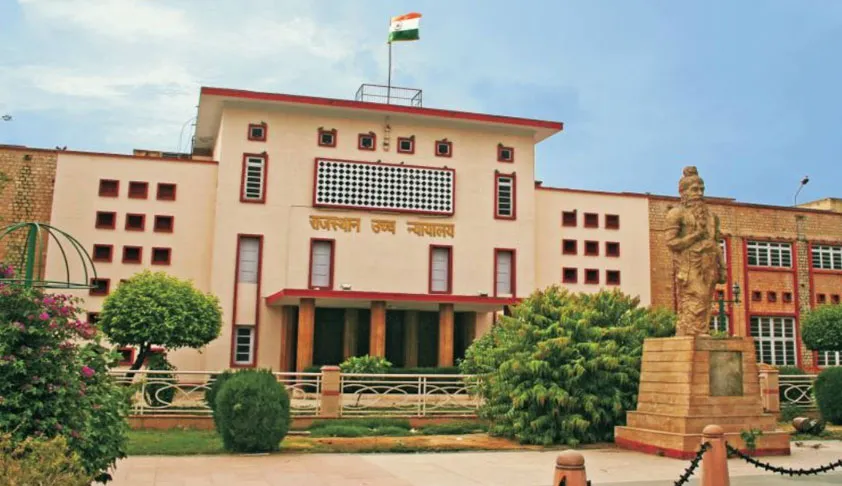
The Rajasthan High Court has made significant rulings regarding employee transfers and victim rights, emphasizing empathy and legal clarity.
What does the recent ruling by the Rajasthan High Court signify for employee rights and victim appeals? The court has set a precedent by emphasizing empathy towards employees suffering from medical ailments and clarifying legal rights for victims.
On March 16, 2026, the Rajasthan High Court set aside the transfer of a State Bank of India (SBI) employee who was suffering from an Ischemic Stroke, which restricted his body movement. The court highlighted that banks must show empathy towards employees with medical conditions, stating, “Banks Must Show Empathy Toward Employees With Medical Ailments; Can’t Rigidly Follow Transfer Circulars.” This ruling underscores the need for organizations to consider the personal circumstances of their employees.
The court directed SBI to pass appropriate orders within one of the networks at Jaipur, indicating that the existing transfer policies should be flexible enough to accommodate employees facing health challenges.
In a separate ruling, the Rajasthan High Court ordered the state government to relieve a medical officer for higher studies, asserting that a doctor cannot be prevented from pursuing educational advancement due to administrative inconvenience. Justice Nupur Bhati remarked, “Qualified doctors are valuable assets not only to the medical field but also to society as a whole,” reinforcing the importance of supporting professionals in their career development.
Additionally, the court ruled that a victim’s appeal against the grant of probation to a convict is not maintainable under Section 372 of the Criminal Procedure Code (CrPC). The court observed that a victim’s appeal challenging probation was jurisdictionally wrong, clarifying the legal boundaries of victim rights in such cases. This ruling aims to delineate the scope of legal recourse available to victims in the judicial process.
The court also highlighted that the Circular did not mandate only one Officer of the Line of Operations (OLO) in that Network, allowing for more than one OLO to be posted in various circumstances. This flexibility may lead to more compassionate handling of employee transfers in the future.
As these rulings unfold, the implications for both employees and victims in Rajasthan will be closely monitored. The court’s emphasis on empathy and legal clarity may pave the way for more humane policies and practices in the workplace and the judicial system.
Details remain unconfirmed regarding the broader impact of these rulings on similar cases across India.