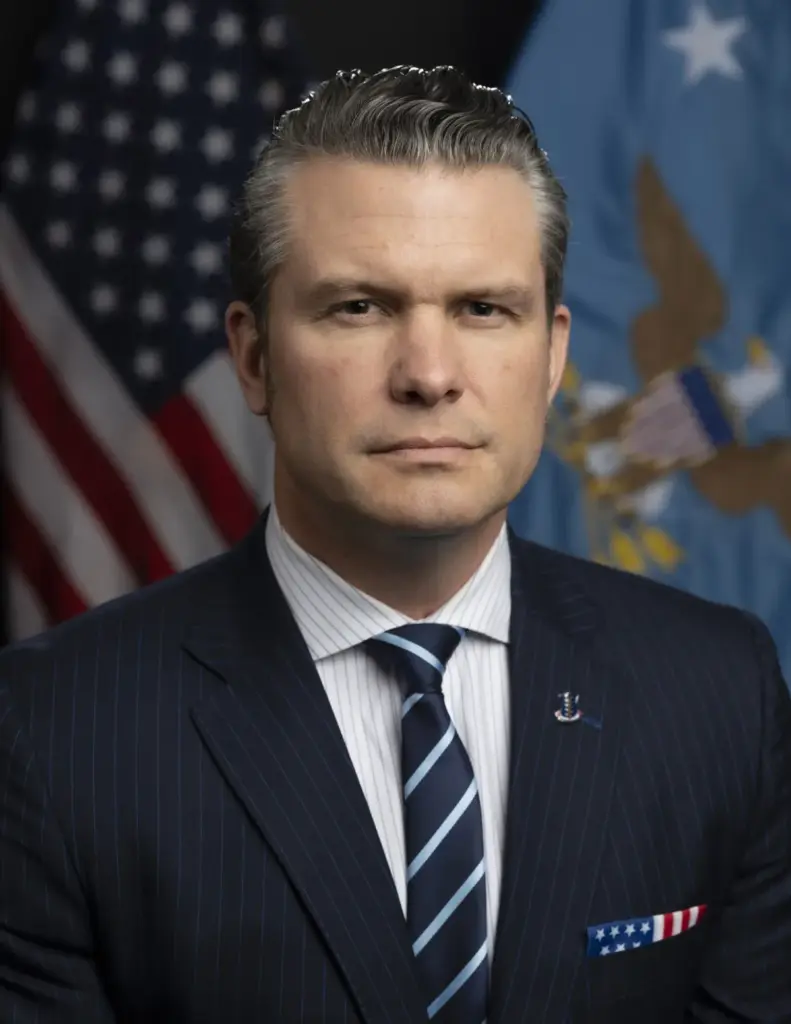
Pete Hegseth has emerged as a significant figure in the ongoing conflict with Iran, influencing military strategies and discussions.
The ongoing conflict with Iran has escalated significantly, with 13 American service members reported dead since military actions began in late February 2026. Central to this situation is Pete Hegseth, who has taken a prominent role in discussions surrounding military strategies against Iran.
Donald Trump recently acknowledged Hegseth’s influence, stating, “Pete, I think you were the first one to speak up and you said, ‘Let’s do it because you can’t let them have a nuclear weapon.'” This endorsement highlights Hegseth’s position as a key advisor in the Pentagon regarding the war effort.
The backdrop of this conflict is complex, with Trump asserting that Iran has been a purveyor of terror for 47 years and is dangerously close to acquiring nuclear capabilities. Despite Trump’s claims of productive conversations between the U.S. and Iran aimed at conflict resolution, Iran has vehemently denied these negotiations, labeling them as fake news.
In light of the escalating tensions, Trump extended the deadline for Iran to meet U.S. demands by five days, a move that reflects the administration’s ongoing attempts to manage the situation. However, the exact reasons for the military action remain unclear, with various officials within the administration presenting differing narratives.
Hegseth’s role has not gone unnoticed, as he has been credited with a quick response regarding military action against Iran. He stated that the military effort is “very much on track” but refrained from providing a definitive timeframe for the operation.
The conflict has already seen significant casualties, and the resignation of Joe Kent, the first senior official to step down over the war, underscores the internal divisions within the administration regarding the approach to Iran.
As the situation continues to unfold, uncertainties linger about the true motivations behind the U.S. military actions and the status of negotiations with Iran. Details remain unconfirmed, leaving observers to speculate on the future of U.S.-Iran relations and the potential for further escalation in the region.