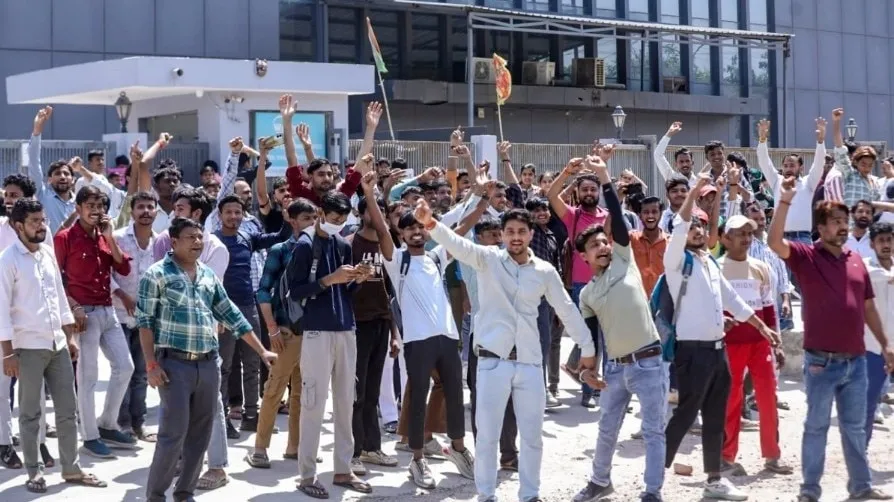
The Noida protests that began on April 9, 2026, caused major traffic disruptions and raised questions about living costs and stagnant wages.
On April 13, 2026, a significant labour protest in Noida, India, brought traffic to a near standstill for nearly six hours, affecting thousands of commuters. The protest, which began on April 9, was primarily driven by workers demanding better wages and relief from rising living costs. Key routes, including the Delhi-Noida Link Road and the DND flyway, experienced severe congestion, with long tailbacks reported stretching several kilometres.
The immediate impact of the protests was felt across the region, with the Delhi Traffic Police issuing its first advisory at 11:48 AM on the day of the protest. Commuters like Ankit Sharma expressed their frustration, stating, “It took me nearly two and a half hours to reach from Indirapuram to Okhla. Usually, it’s a 45-minute drive.” Another commuter, Neha Gupta, highlighted the lack of timely information, saying, “There was no proper advisory in the morning. By the time we realised what was happening, we were already stuck in the middle of it.” The situation began to ease by mid-afternoon and was nearly resolved by late evening, but the disruption had already impacted school operations in both Delhi and Noida.
In the broader context, the protests reflect ongoing tensions in the region regarding economic conditions. Workers have been staging sit-ins over stagnant wages and the rising cost of living, issues that have been exacerbated by the economic climate. The protests resulted in vandalism across 80 factories in Greater Noida and Noida, raising concerns over safety and security in the area. The Local Intelligence Unit of the Noida Police faced criticism for failing to provide timely intelligence, which contributed to the breakdown of law and order.
Uttar Pradesh Labour Minister Anil Rajbhar commented on the protests, stating that they are being investigated as part of a “larger conspiracy.” He further suggested a “possible Pakistan link” to the unrest, although the exact nature of this conspiracy remains unclear. Rajbhar urged the public to avoid falling prey to misleading information and to maintain peace amidst the turmoil.
The protests have drawn attention to the effectiveness of police and administrative responses in managing civil unrest. While adequate police deployment was ensured after earlier disruptions, the failure to prevent the escalation of the protests raises questions about preparedness and response strategies. Details remain unconfirmed regarding the full extent of the police’s effectiveness in handling the situation.
As the protests unfolded, the impact on daily life in Noida and surrounding areas became increasingly evident. Commuters faced significant delays, and the disruption of traffic highlighted the interconnectedness of economic issues and public order. The situation has prompted discussions among officials and the public about the need for better communication and proactive measures to address the underlying grievances of the workers.
In summary, the Noida protests of April 2026 serve as a stark reminder of the challenges faced by workers in the region. As authorities investigate the circumstances surrounding the protests, the focus remains on finding solutions to the pressing issues of living costs and wage stagnation that have driven workers to take to the streets. The response from local officials and the community will be crucial in determining the future stability of the region.