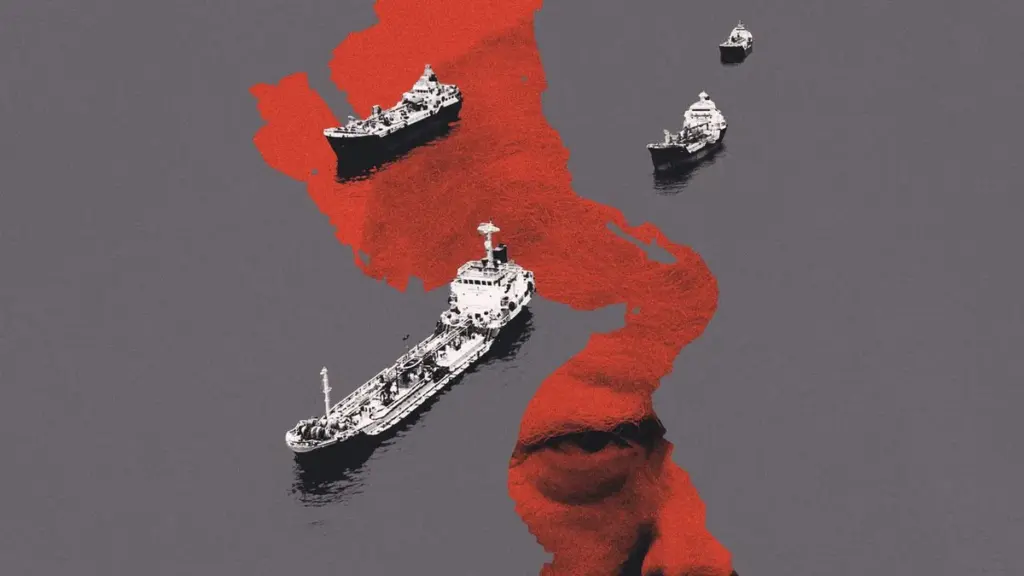
The recent military actions in the Middle East highlight the evolving dynamics of the new world order, particularly regarding U.S.-Iran relations.
Key moments
In a significant escalation of military tensions, Israeli fighter jets have targeted South Pars, the world’s largest natural-gas field, which is shared by Iran and Qatar. This operation is part of a broader strategy by the U.S. and Israel aimed at toppling the Iranian government and diminishing its influence in the region. The timing of these strikes coincides with a critical moment in international relations, as the U.S. has issued stark warnings to Iran regarding its control over the Strait of Hormuz.
The Strait of Hormuz is a vital maritime corridor, just 35 miles wide, through which approximately one-fifth of the world’s oil and natural gas supply flows. The strategic importance of this waterway cannot be overstated, as it serves as a lifeline for global energy markets. In response to the U.S.-Israeli strikes, Iran has threatened to shut down the Strait as a means of deterring further military actions against it.
Following the strike that reportedly killed Iran’s Supreme Leader, President Trump demanded Iran’s unconditional surrender. He warned that Iran must fully open the Strait of Hormuz within 48 hours or face the obliteration of its power plants. This ultimatum underscores the high stakes involved in this conflict and the potential for a broader military engagement.
Operation Epic Fury, which has been described as swift and decisive, has reportedly eliminated key figures in Iran’s leadership, significantly degrading the country’s capacity to project power and influence in the region. Trump’s military interventions have drawn parallels to the Cold War strategy of “peace through strength,” reminiscent of Ronald Reagan’s approach. The U.S. military has been working closely with Israel, reflecting a unified front against perceived threats from Iran.
As tensions escalate, various commentators have weighed in on the implications of these developments. Chris Hedges has articulated a grim vision of the new world order, stating, “The new world order is one where the weak are obliterated by the strong, the rule of law does not exist, genocide is an instrument of control and barbarism is triumphant.” This perspective highlights the potential for increased violence and instability as powerful nations exert their influence over weaker states.
Robert Pape, a political analyst, remarked on the precarious situation, noting, “Trump needed to cut a deal, and he could still try to cut a deal, but the price, the political price, of the deal keeps going up, and so the problem he’s facing is, there’s no golden off-ramp.” This commentary reflects the challenges facing U.S. leadership as it navigates a complex geopolitical landscape.
Historically, the U.S. military has mapped out various scenarios involving war with Iran, anticipating potential strategies and outcomes. The ongoing situation is not merely a reaction to recent events but is rooted in decades of complex interactions between the U.S. and Iran, dating back to the 1979 revolution. Over these 47 years, eight American presidents have attempted to address the challenges posed by Iran, each facing their own set of obstacles.
The current developments signal a critical juncture in international relations, with the potential for significant repercussions not only for the Middle East but for global stability as a whole. As the situation unfolds, the world watches closely, aware that the actions taken today could shape the geopolitical landscape for years to come. Details remain unconfirmed.