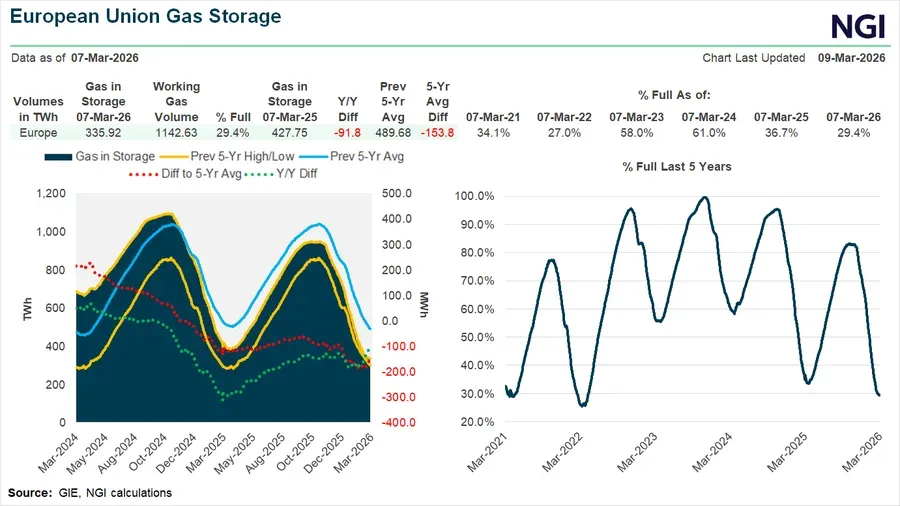
The natural gas price has surged due to geopolitical tensions, impacting global markets and local economies.
Natural Gas Price Surges Amid Geopolitical Tensions
“Yes, yes, definitely,” remarked Alma Newell, reflecting the growing concerns surrounding the natural gas price as geopolitical tensions escalate. The cost of natural gas in the spot market has risen dramatically, reaching $25.40 per million British thermal units (mbtu), a significant increase attributed to the ongoing tensions between the US, Israel, and Iran.
The backdrop to this price surge includes the disruptions caused by the war, notably the shuttering of the Strait of Hormuz, a critical node in global transit and shipping. This strategic waterway is vital for energy supplies, and more than 50% of India’s imported liquefied natural gas (LNG) passes through it. As a result, the implications of these tensions are felt not only in the international markets but also within local economies, particularly in countries heavily reliant on LNG imports.
In January, India’s total consumption of natural gas was recorded at 5,252 million metric standard cubic metres (MMSCM), with approximately 54% of this demand met through LNG imports. The rising prices have prompted Indian oil marketing companies to raise liquefied petroleum gas (LPG) prices by an average of Rs 60 per cylinder, further straining consumers already facing higher energy costs.
Gregory Brew, an energy analyst, noted, “I think the current price increase in oil suggests the US will see $3.50 to $4 gasoline by next week, and $5 diesel this week.” This prediction underscores the interconnectedness of oil and gas prices, as fluctuations in one often lead to changes in the other. The increase in crude oil prices, which rose from about $67 per barrel before the war to nearly $97 recently, has compounded the challenges faced by consumers and businesses alike.
GAIL (India) Ltd has reported that its long-term supplier, Petronet LNG Limited (PLL), has issued a force majeure notice, indicating potential disruptions in supply. In response, GAIL is currently assessing the situation with respect to any supply curtailment that may need to be imposed on its downstream customers. This proactive approach highlights the seriousness of the current energy landscape and the need for companies to adapt swiftly to changing conditions.
As the situation evolves, the Indian government has mandated that all oil refining companies operating in the country maximize the utilization of propane and butane streams for LPG production. This directive aims to mitigate the impact of rising natural gas prices on consumers and ensure a steady supply of essential energy resources.
Details remain unconfirmed regarding the long-term implications of these price fluctuations and supply chain disruptions. However, the current trajectory suggests that consumers may continue to face elevated energy costs in the near future, prompting discussions on energy policy and market stability.