Recent developments in metro systems in India have sparked discussions about work culture and urban mobility, particularly in Delhi and Pune.
Who is involved
The landscape of urban transportation in India has been evolving rapidly, particularly with the expansion of metro systems in major cities like Delhi and Pune. Historically, the expectation was that these metro systems would alleviate traffic congestion and provide a reliable mode of transport for millions. Delhi Metro, for instance, has been a cornerstone of public transport, handling an impressive 235.8 crore passenger journeys in 2025, with an average daily ridership of 64.6 lakh passengers.
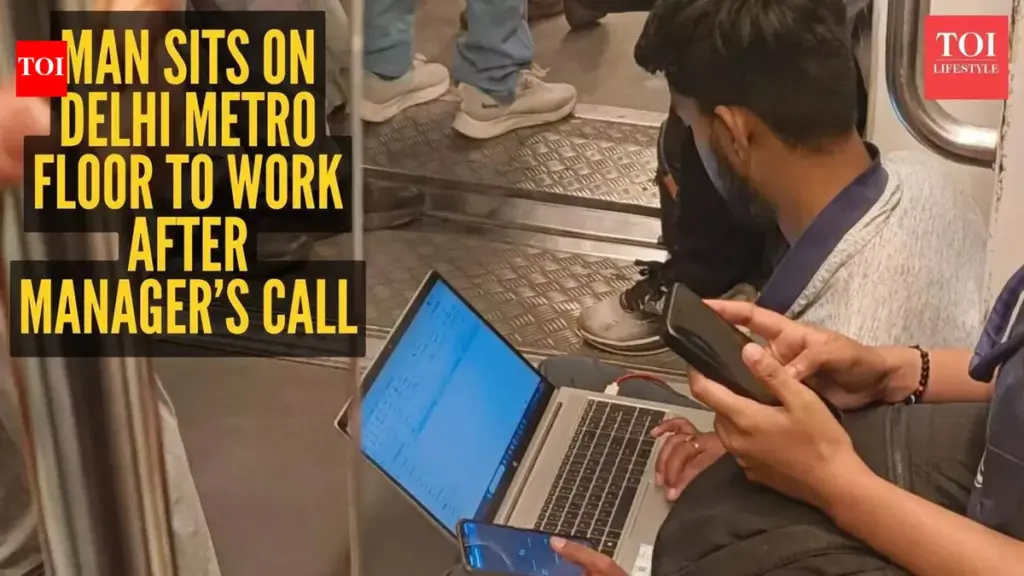
However, recent events have highlighted a contrasting reality. A photo of a man working on the floor of a crowded Delhi Metro coach went viral on social media after he received a call from his manager. This image sparked a significant conversation about work pressure and hustle culture, with many commenting on the dedication and the toxic work environment that such a scenario represents. “This is dedication at another level. Respect,” one observer noted, while another remarked, “No job should make you sit on the floor in a crowded metro and work.” This incident underscores the challenges faced by commuters who are also balancing demanding work expectations.
As the Delhi Metro continues to operate one of the largest driverless networks in the world, the implications of such a work culture become more pronounced. The Delhi-NCR metro network spans approximately 416 kilometres with 303 stations, providing extensive coverage for its users. Yet, the pressure to maintain productivity while commuting raises questions about the quality of life for urban workers.
In contrast, the Pune Metro is in a different phase of development. Currently operating across a 33-kilometre stretch, it is expanding to nearly 200 kilometres. With nearly 25,000 passengers using the Pune Metro daily, the system is still in its formative years compared to its Delhi counterpart. The Hinjewadi metro line in Pune is expected to begin operations in May 2026, which could significantly enhance connectivity in the region.
Devendra Fadnavis, a prominent political figure in Maharashtra, emphasized the importance of mobility in the context of the state’s first Global Capability Centres (GCC) policy. He stated, “Maharashtra is the first state to formulate GCC policy and in such a situation mobility is very important.” This highlights the strategic role that metro systems play in supporting economic development and urban planning.
The stark contrast between the operational maturity of the Delhi Metro and the developmental phase of the Pune Metro illustrates the varying challenges and opportunities faced by urban transit systems in India. While Delhi’s extensive network is a testament to years of investment and planning, Pune’s system is still establishing its foothold in the urban landscape.
As cities continue to grow and evolve, the need for efficient and humane public transportation systems becomes increasingly critical. The viral photo serves as a reminder of the human aspect of commuting, urging stakeholders to consider not just the infrastructure but also the experiences of the individuals who rely on these systems daily. The dialogue surrounding work culture and urban mobility is likely to shape the future of metro systems across India.