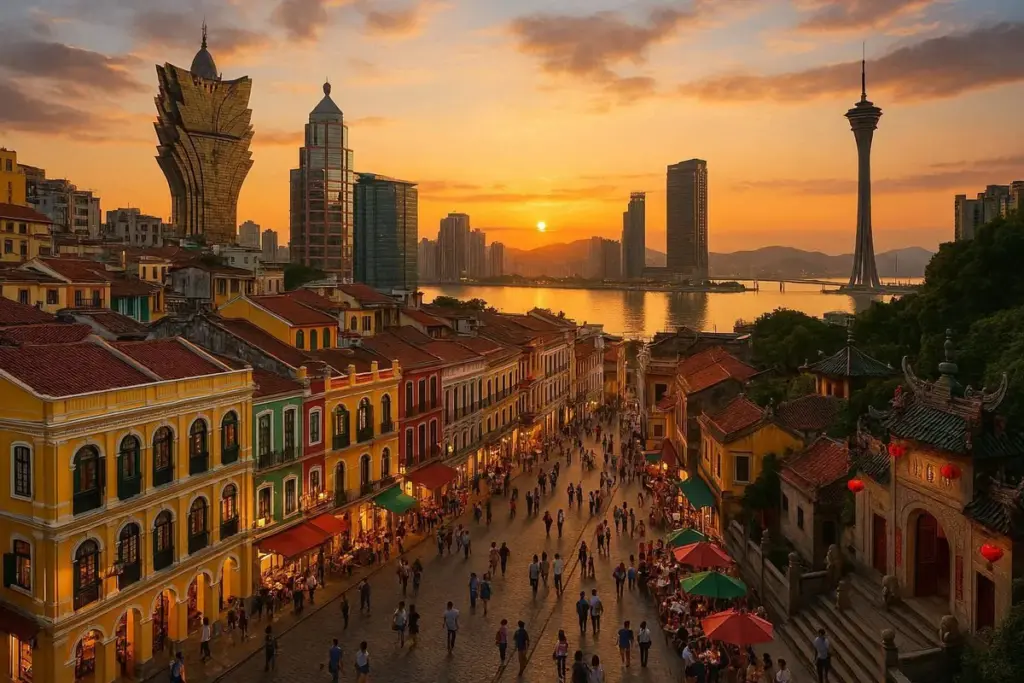
Macao continues to attract British travelers with its unique blend of culture and entertainment. Recent initiatives aim to enhance its tourism industry.
Macao, a small city located on China’s southern coast, is witnessing a surge in interest from British travelers. Known for its rich cultural heritage and vibrant entertainment scene, Macao has become a focal point for tourism, particularly with its approximately 47,000 hotel rooms catering to visitors.
Recent developments include a new policy introduced by Hengqin, which aims to bolster the culture and tourism industry. This initiative will subsidize 50% of the costs for enterprises that develop multilingual signage, with a maximum subsidy of 1 million yuan available for evening performances. Such measures are expected to enhance the visitor experience and attract more international tourists.
Macao spans just 33 square kilometers and is part of the Greater Bay Area, alongside Hong Kong and Guangdong. The city has transformed significantly since its return to China in 1999, evolving from a former Portuguese colony into a global hub for luxury resorts and entertainment venues.
The Historic Centre of Macao, a UNESCO World Heritage site, features 20 significant buildings, squares, churches, and temples, showcasing the city’s unique blend of Portuguese and Chinese cultures. This rich history, coupled with modern attractions like the Cotai Strip, makes Macao a compelling destination for travelers.
According to Zhang Li, a local tourism expert, “Macao’s appeal lies in its ability to offer an authentic and immersive experience that is not just about scenic beauty, but about connecting with the people and culture of the region.” This sentiment resonates with many visitors who seek a deeper understanding of Macao beyond its tourist attractions.
The annual Macao Grand Prix, held in November, further highlights the city’s vibrant events calendar, drawing motorsport enthusiasts from around the world. Additionally, the Macao Orchestra has been actively engaging with the community, holding concerts during the Spring Festival and visiting elderly homes and special education schools.
As Macao continues to develop its tourism infrastructure, the city remains a testament to the enduring legacy of its 500 years of Portuguese influence. With its unique cultural offerings and strategic location just an hour’s drive from Hong Kong International Airport, Macao is poised to attract even more visitors in the coming years.
Details remain unconfirmed regarding the full impact of these new initiatives, but the local government is optimistic about the future of tourism in Macao.