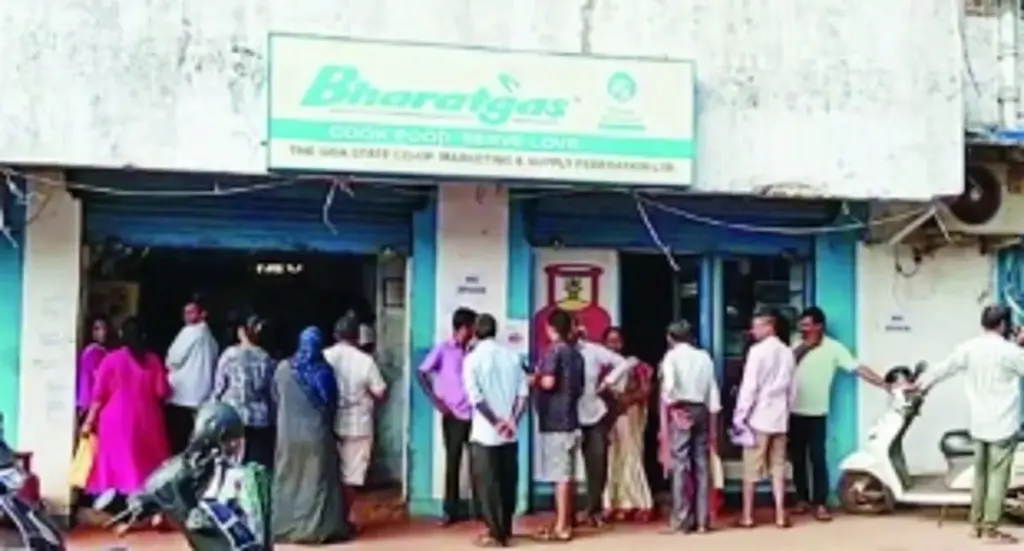
Delhi is facing a significant LPG gas cylinder shortage, causing long queues and rising prices, as protests erupt from local political leaders.
Key moments
On March 25, 2026, Delhi is grappling with a severe shortage of LPG gas cylinders, prompting protests from the Aam Aadmi Party (AAP) as residents struggle to secure this essential resource. Long lines have formed across the city and nationwide, with many people waiting for hours to obtain a single cylinder. Prices have skyrocketed, with cylinders now being sold for between ₹5000 and ₹6000, making it increasingly difficult for households to afford this vital fuel.
The immediate circumstances surrounding this crisis are alarming. AAP leaders, including Atishi and Sanjeev Jha, have voiced their concerns, stating, “Today, across the country, long queues are forming for a single gas cylinder,” and “There is devastation across the country and people are not getting gas cylinders.” The situation has reached a point where some residents are being forced to organize community meals, or ‘bhandara(s)’, as they lack access to cooking fuel.
This shortage is not just limited to Delhi; it has also impacted the tourism sector in Meghalaya, where hotels and restaurants are scaling back operations due to a lack of commercial LPG. The hospitality industry, which welcomed 1.6 million tourists last year, warns that prolonged shortages could significantly affect visitor experiences. Essential services, including hospitals, are being prioritized for the limited LPG stocks available in the region.
The broader context of this crisis reveals a connection to geopolitical issues affecting LPG imports from the Middle East. The blockage of the Strait of Hormuz has disrupted the supply chain, leading the Indian government to mandate a transition from LPG to piped natural gas (PNG) in areas where it is available. Households will receive a three-month window to switch to PNG once notified; failure to do so may result in the discontinuation of their LPG supply.
Officials are pushing for a rapid expansion of natural gas pipelines across India as part of a strategy to reduce dependence on imported LPG, particularly in light of ongoing geopolitical energy crises. This shift aims to stabilize the energy supply and mitigate the impact of future shortages.
In response to the crisis, AAP leaders have been vocal in their criticism of the central government, with Atishi stating, “Narendra Modi Ne Kiya Surrender, Gayab Hua Gas Cylinder,” highlighting their frustration with the current administration’s handling of the situation. The urgency of the matter has prompted calls for immediate action to address the growing needs of the public.
As the situation continues to evolve, residents and businesses alike are left in uncertainty. Details remain unconfirmed regarding the government’s next steps to alleviate the crisis, but the need for a solution is increasingly pressing. The combination of rising prices, long wait times, and the impact on essential services paints a worrying picture for many households across Delhi and beyond.