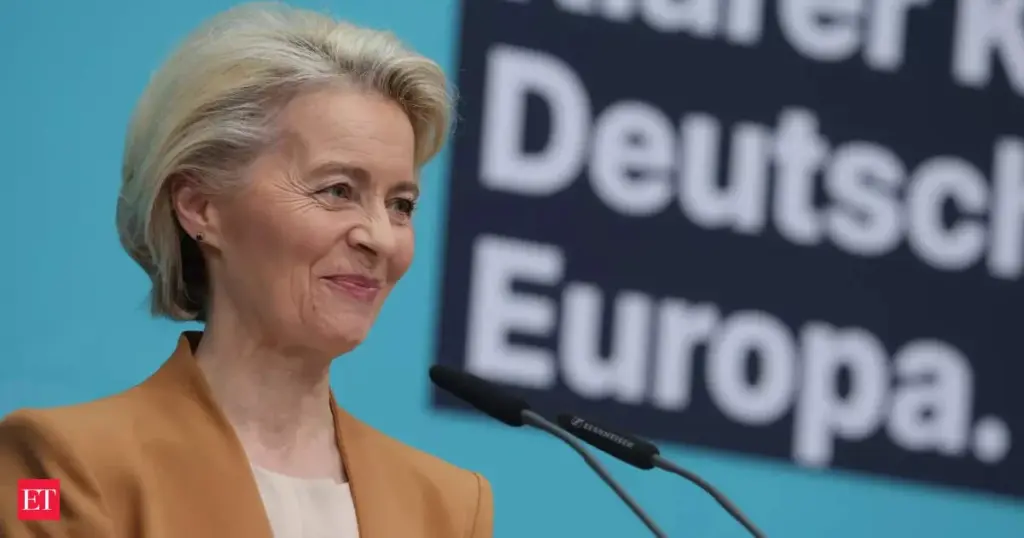
Ursula von der Leyen’s recent comments on the world order have ignited controversy within the European Union, leading to calls for clarification and dissent among member states.
Context of the Remarks
In a recent address, Ursula von der Leyen, the president of the European Commission, made a bold declaration stating that the rules-based world order is finished. This statement has not only stirred significant debate but also caused turbulence within the European Union, as various member states reacted to her comments.
Following von der Leyen’s remarks, António Costa, the president of the European Council, publicly disagreed with her stance, emphasizing the necessity for Europeans to defend the rules-based international order. Costa’s response reflects a growing concern among EU leaders regarding the implications of von der Leyen’s statement on the bloc’s foreign policy and diplomatic coherence.
Discontent Among Member States
Discontent with von der Leyen’s comments has been particularly pronounced in countries like France and Spain. Spanish Foreign Minister José Manuel Albares voiced his disagreement with Germany’s vision on international order, suggesting that there is a disconnect between member states on how to approach global governance. This discord highlights the challenges the EU faces in presenting a unified foreign policy.
Calls for Clarification
The backlash against von der Leyen’s remarks has led to calls for clarification regarding her views. Some EU officials have even suggested the possibility of a no-confidence vote against her, indicating the seriousness of the discontent brewing within the union. In response to the criticism, the European Commission quickly moved to add nuance to von der Leyen’s words, attempting to mitigate the fallout from her initial comments.
Criticism of Foreign Policy Actions
Von der Leyen’s foreign policy actions have also come under scrutiny, with critics arguing that she has overstepped her bounds as the president of the European Commission. The French government has warned that the High Representative is responsible for directing the Union’s common foreign and security policy, suggesting that von der Leyen’s comments could undermine established diplomatic protocols.
Support for Israel During Gaza Conflict
Adding to the controversy, von der Leyen faced criticism for her support of Israel during the recent Gaza conflict. Her stance has been viewed as polarizing, further complicating her position within the EU and raising questions about the Commission’s role in international diplomacy.
Current State of Affairs
As it stands, the European Union is grappling with the implications of von der Leyen’s remarks and the subsequent reactions from member states. The situation remains fluid, with various leaders expressing their concerns and calling for a reaffirmation of the rules-based international order. The internal discord highlights the complexities of EU foreign policy and the challenges of maintaining a cohesive stance in the face of global shifts.
Significance of the Events
This sequence of events matters significantly for those involved, as it underscores the delicate balance of power and influence within the EU. Von der Leyen’s comments and the reactions they have provoked reveal the underlying tensions among member states regarding foreign policy direction. As the EU navigates these challenges, the need for a unified approach to international relations becomes increasingly critical.