M.K. Stalin’s recent campaign in Coimbatore signals a potential shift in political power, aiming for DMK dominance in the upcoming elections.
Historically, the DMK has been a formidable political force in Tamil Nadu, consistently shaping the state’s governance and policies. In recent years, however, other parties like AIADMK and BJP have also carved out significant support bases, particularly in regions like Coimbatore. This backdrop sets the stage for an intriguing political battle ahead of the 2026 elections.
Recently, M.K. Stalin campaigned vigorously in Coimbatore, asserting that the constituency will become a DMK stronghold by election time. “Coimbatore will become a DMK stronghold in the 2026 elections,” he declared emphatically. Such statements are not merely optimistic assertions; they reflect a strategic push by the DMK to reclaim and solidify power in an area traditionally leaning toward AIADMK and BJP.
Stalin’s campaign also included support for candidates from the secular progressive alliance across multiple constituencies. This strategy aims to unite various factions under the DMK banner, potentially drawing voters disillusioned with current governance. But what does this mean for AIADMK and BJP supporters?
Stalin predicted a significant defeat for the AIADMK-BJP alliance specifically in the Nilgiri district, suggesting that voter sentiment may be shifting. He criticized Prime Minister Modi’s ‘double engine’ government claim, which posits that having aligned state and central governments leads to better outcomes for citizens.
He further pointed out failures such as the delayed Madurai AIIMS project, framing it as a failure of this so-called double engine government. “The delayed Madurai AIIMS project is a failure of the ‘double engine’ government,” he stated, highlighting infrastructural shortcomings that resonate with local voters.
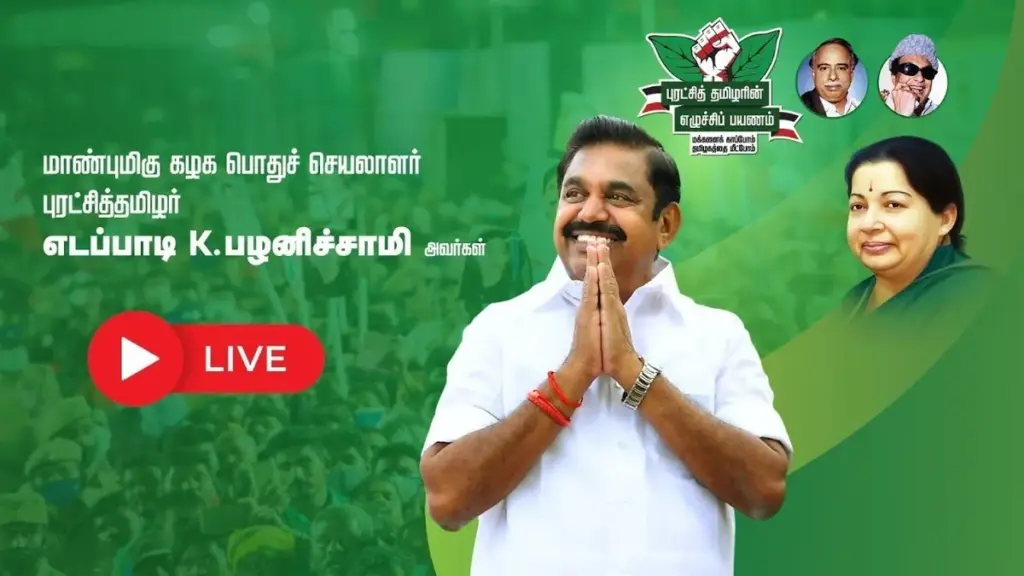
Moreover, Stalin took aim at former Chief Minister Palaniswami’s support for BJP laws, predicting that such alignment would lead to electoral defeat. “Palaniswami’s support for BJP’s laws will lead to defeat,” he remarked, suggesting that local concerns might outweigh party loyalty.
This context matters because it illustrates how local issues are becoming pivotal in shaping voter preferences ahead of the elections. The DMK’s ambition to gain ground in Coimbatore—specifically within the Kongu region—could redefine political dynamics not just locally but also across Tamil Nadu.
As we approach April 19, 2026, observers are keenly watching how these developments unfold. Will M.K. Stalin’s predictions hold true? Only time will tell if DMK can indeed convert its campaigning momentum into electoral success.