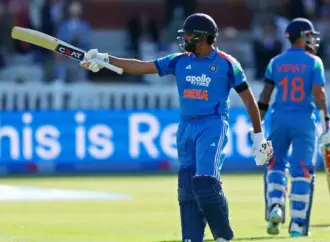
Kirti Azad has criticized the Indian cricket team’s decision to take the T20 World Cup trophy to a temple, stating it represents all Indians.
Kirti Azad’s criticism is rooted in his experience as a member of the 1983 World Cup-winning team, which included players from diverse religious backgrounds. On March 8, 2026, the Indian cricket team celebrated their victory over New Zealand, securing their third T20 World Cup title. Following the match at the Narendra Modi Stadium, the team took the trophy to a temple in Ahmedabad for blessings.
Recent Developments
Azad publicly criticized this decision, stating, “This Team Represents INDIA — not Surya Kumar Yadav’s or Jay Shah’s Family!” He emphasized that the trophy belongs to “1.4 billion Indians of EVERY Faith — NOT ONE RELIGION’S VICTORY LAP!” His remarks highlight a broader concern regarding the representation of all Indians in sports.
In his statements, Azad pointed out that sportspersons do not belong to any religion or caste, but solely to the sport itself. He remarked, “A sportsperson or sports does not belong to any religion or caste but only to the sport.” This perspective reflects his belief that sports should unite rather than divide based on religious lines.
Azad’s sentiments are influenced by his own history as part of the 1983 World Cup-winning squad, which was notably diverse, featuring players of various faiths. He recalled, “When we won the World Cup under Kapil Dev in 1983, we had Hindu, Muslim, Sikh, and Christian in the team.” This historical context underscores his argument that sports should transcend religious affiliations.
Reactions and Future Implications
The reactions to Azad’s comments have sparked discussions among fans and analysts alike. Observers note that his statements may influence how future victories are celebrated and the importance of inclusivity in sports. As the conversation continues, it remains to be seen how the cricket community will respond to calls for a more unified representation of all Indians in the sport.