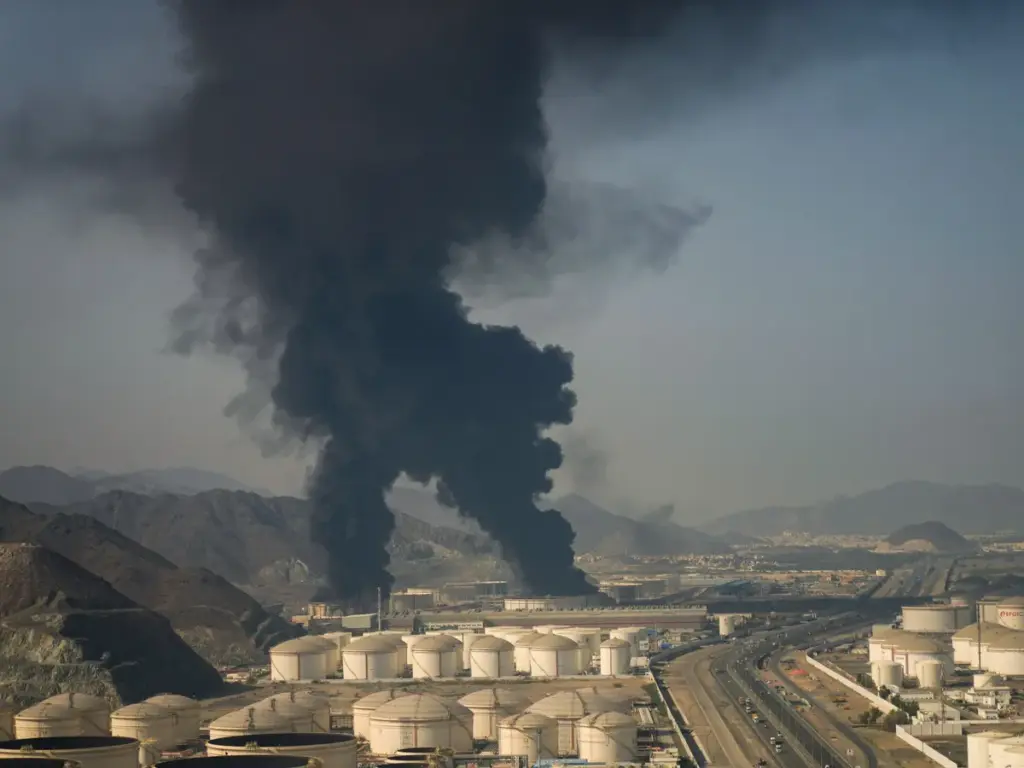
Recent drone attacks and missile interceptions highlight the escalating tensions in the Israel-Iran war, particularly affecting Dubai and the UAE.
What the data shows
The ongoing conflict between Israel and Iran has raised significant concerns regarding security in the Gulf region, particularly in Dubai. A recent drone attack on March 17, 2026, sparked a fire at the Fujairah Oil Industry Zone, underscoring the escalating hostilities. The UAE’s military response included intercepting 10 Iranian ballistic missiles and 45 drones on the same day, highlighting the immediate threats faced by the nation.
Despite the severity of the situation, authorities reported no casualties from the drone attack on the oil hub. However, the UAE has been under consistent threat, with Iran having launched over 1,800 missiles and drones at the country since the conflict began. This level of aggression has prompted the UAE to temporarily close its airspace due to missile threats, further complicating the security landscape in the region.
Residents of Dubai received emergency alerts warning of potential missile threats, indicating the pervasive anxiety among the population. The Dubai Media Office confirmed that the sounds heard across parts of the city were the result of successful air defense interception operations, which have become increasingly crucial as the conflict escalates.
Falling debris from intercepted missiles has caused damage and fatalities in the UAE, raising questions about the effectiveness of current defense measures. The UAE has faced the brunt of Iranian attacks compared to other Gulf countries, making it a focal point in the ongoing conflict. On the same day as the drone attack, Kuwait’s National Guard intercepted two drones, illustrating the wider regional implications of the war.
The US-Israeli war, which began on February 28, 2026, has further complicated the dynamics in the Gulf. Iran has sought to justify its attacks on Gulf countries by arguing that the presence of US military bases on their soil makes those states legitimate targets. This rationale has fueled tensions and increased the likelihood of retaliatory actions from the UAE and its allies.
As the conflict continues, the situation remains fluid, with the potential for further escalations. The UAE’s proactive military measures reflect a commitment to safeguarding its territory and citizens, but the ongoing threat from Iranian forces poses significant challenges. Details remain unconfirmed regarding the full extent of damage and casualties resulting from the recent attacks.
Looking ahead, the international community is closely monitoring the developments in the region. The involvement of the Gulf Cooperation Council, along with other regional players like Qatar and Saudi Arabia, will be crucial in addressing the security challenges posed by the Israel-Iran war. The outcome of this conflict will likely have lasting implications for the stability of the Gulf region and its geopolitical landscape.