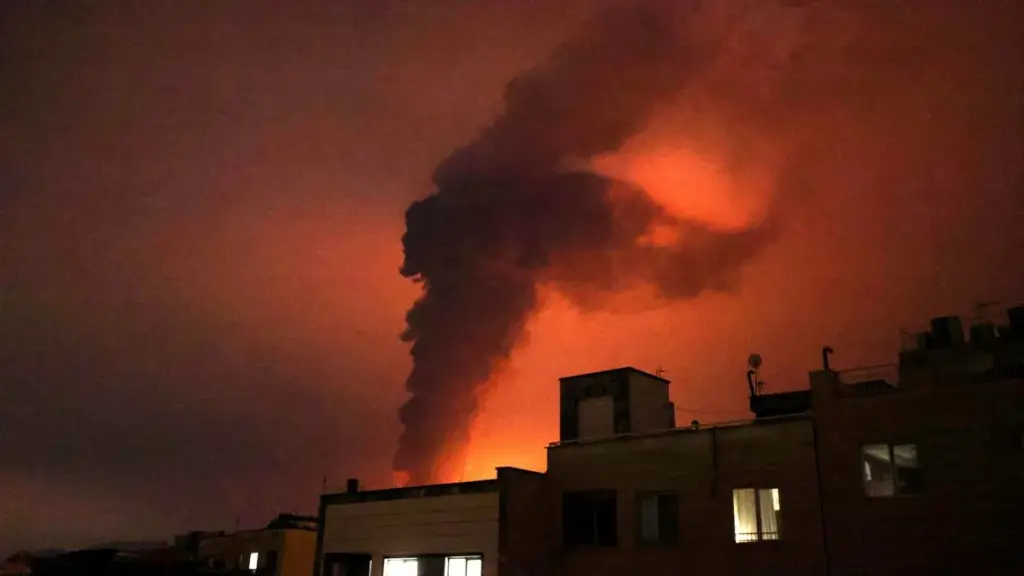
The Israel Iran war has intensified with recent strikes and missile attacks, resulting in casualties in both Tehran and Israel. Reactions from regional leaders are emerging.
Escalation in the Israel Iran War
On March 8, 2026, the ongoing Israel Iran war escalated significantly as the United States and Israel targeted five oil facilities in and near Tehran, resulting in the deaths of four individuals, including two oil tanker drivers.
In retaliation, Iran launched drone and missile strikes aimed at Israeli and US interests across the region. Air raid sirens were activated throughout Israel as several missiles were reported to have been launched from Iran.
The Israeli military confirmed that the missile attacks from Iran have resulted in the deaths of at least ten people in Israel. The situation remains tense, with security agencies in the UAE on high alert due to the regional tensions.
Keramat Veyskarami, an Iranian official, stated, “Four of our personnel, including two oil tanker drivers, were killed in the incident,” highlighting the human cost of the conflict.
Context of the Conflict
This escalation follows the initiation of the war on February 28, 2026, when US-Israeli strikes on Iran commenced. The conflict has since led to a series of retaliatory actions, further complicating the geopolitical landscape in the Middle East.
UAE President Mohamed bin Zayed Al Nahyan addressed the nation, urging residents to forgive any shortcomings amid the ongoing war, emphasizing the importance of unity during these challenging times. He remarked, “Residents are part of the family,” reflecting an appeal for solidarity.
Looking Ahead
As the situation develops, details remain unconfirmed regarding the exact number of casualties and damage resulting from the missile strikes in Israel. The international community is closely monitoring the situation, with potential implications for regional stability.