IRCTC is facing fluctuations in share prices while launching new services for pilgrims. Learn more about the current situation.
What the data shows
The Indian Railway Catering & Tourism Corporation (IRCTC) is currently navigating through a complex landscape of share price fluctuations and service updates. A central question arises: how is IRCTC managing its operations amid these changes? The answer lies in a mix of financial performance and new offerings aimed at enhancing passenger experience.
Recently, IRCTC’s share price closed the previous week with a loss of 0.92%. This decline has raised concerns among investors, particularly as immediate support for the share price is noted at 512.77, with resistance at 538.42. Analysts suggest that if the share price falls below 512.77, a sharp breakdown could occur, indicating potential volatility in the coming weeks. Major support is identified at 502.68, while the trading range for the week is projected between 487.12 and 564.07.
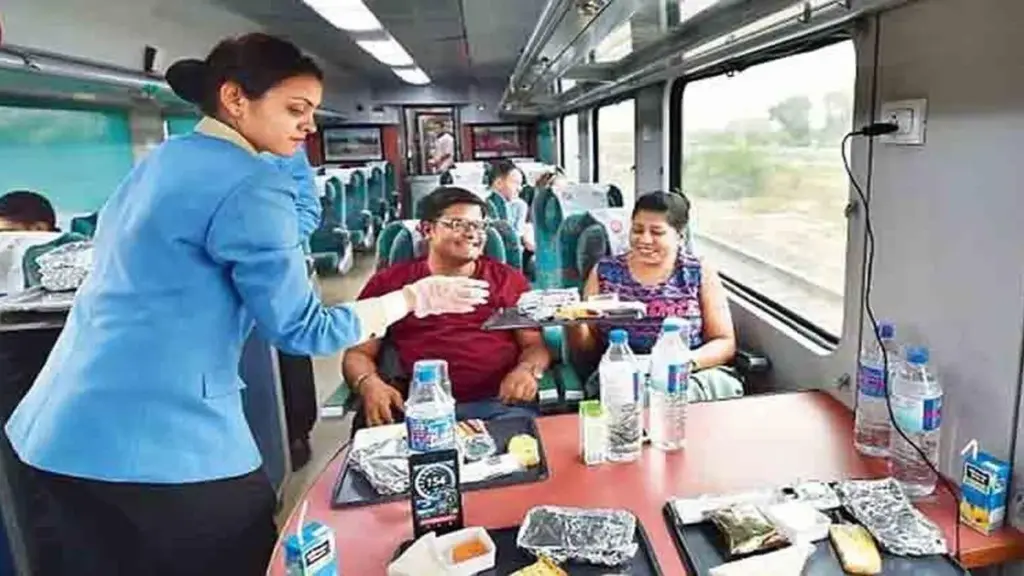
In addition to financial metrics, IRCTC is also focused on improving its service quality. Recently, the corporation penalized a caterer ₹5,000 for failing to serve morning tea on the Duronto Express, highlighting its commitment to maintaining high standards in onboard catering services. Passengers typically pay for morning tea or coffee as part of their ticket fare, making this service an essential aspect of the travel experience.
Looking ahead, IRCTC is set to launch the Bharat Gaurav Train, which will operate from April 11 to April 22, 2026. This train is designed to cover multiple holy sites in South India, catering to pilgrims and tourists alike. The Economy Class ticket price for this service is ₹24,790 per person, while Standard Class tickets are priced at ₹42,530, and Comfort Class tickets at ₹56,710. Bookings for the Bharat Gaurav Train will be available on a first-come, first-served basis, indicating a high demand for this unique travel opportunity.
The introduction of the Bharat Gaurav Train is part of IRCTC’s broader strategy to enhance tourism and pilgrimage travel across India. By connecting significant religious sites such as the Tirupati Balaji Temple, Ramanathaswamy Temple, Meenakshi Temple, Kanyakumari, and Mallikarjuna Jyotirlinga, IRCTC aims to provide a comprehensive travel experience for devotees and tourists.
As IRCTC continues to adapt to market demands and operational challenges, the focus remains on balancing financial performance with service excellence. The upcoming launch of the Bharat Gaurav Train is a testament to this commitment, as it seeks to attract a diverse range of passengers while also addressing the needs of its existing customer base.
Details remain unconfirmed regarding the exact impact of these developments on IRCTC’s long-term financial health. However, the combination of share price dynamics and new service offerings paints a picture of a corporation actively responding to both challenges and opportunities in the railway sector.