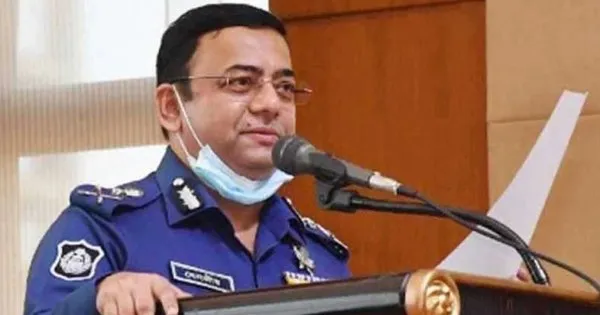
A Dhaka court has issued an arrest warrant for former IGP Benazir Ahmed following allegations of illegal asset accumulation. The case highlights significant corruption concerns.
What led to the arrest warrant for ex-IGP Benazir Ahmed?
A Dhaka court has issued an arrest warrant against former Inspector General of Police (IGP) Benazir Ahmed, raising serious questions about corruption within high-ranking law enforcement officials in Bangladesh. The warrant was issued after the court took cognizance of a charge sheet filed in a case concerning alleged illegal assets.
The case against Ahmed was initiated on December 15, 2024, by Hafizul Islam from the Anti-Corruption Commission (ACC). Following an investigation, a charge sheet was submitted on November 30, 2025, which accused Ahmed of amassing wealth that exceeds her known sources of income.
Details of the Allegations
In her asset statement, Benazir Ahmed declared movable assets worth Tk6.45 crore and immovable assets worth Tk5.74 crore. However, investigators uncovered evidence indicating that she possessed movable assets valued at Tk7.52 crore and immovable assets worth Tk8.15 crore, bringing the total value of identified assets to approximately Tk15.68 crore.
Of particular concern, the charge sheet alleges that assets worth Tk11.04 crore were acquired beyond known sources of income. The court has since declared Ahmed a fugitive, indicating the severity of the situation.
Next Steps and Court Directives
The court has directed authorities to submit a report on the execution of the arrest warrant by March 30, 2026. This development highlights ongoing efforts to address corruption within the ranks of law enforcement in Bangladesh.
Md Riaz Hossain, the bench assistant of the court, confirmed the issuance of the warrant, further emphasizing the legal proceedings against Ahmed.
Details remain unconfirmed regarding the next steps Ahmed may take in response to the warrant. The case continues to unfold, and the implications for the former IGP and the broader law enforcement community in Bangladesh remain to be seen.