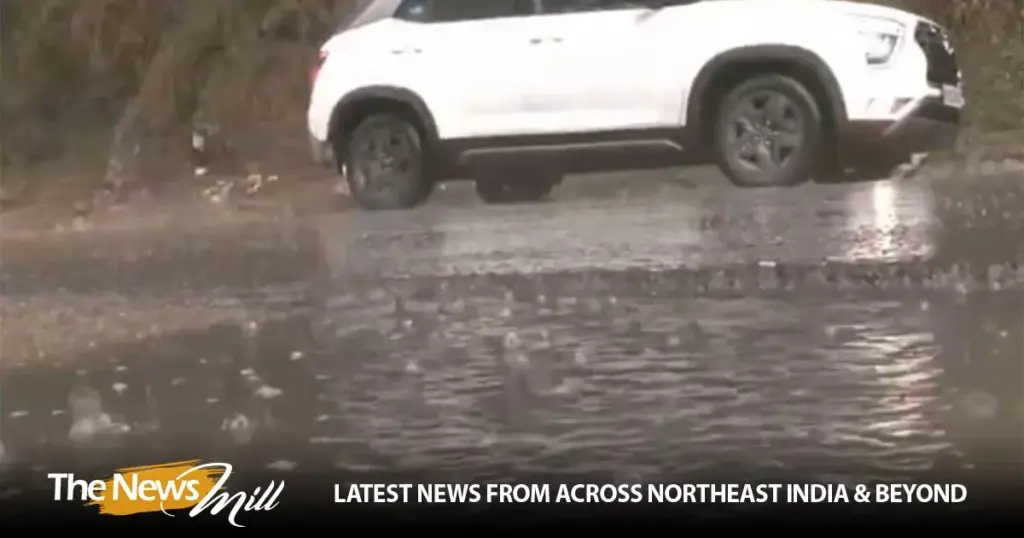
On March 16, 2026, a heavy hailstorm hit Shimla, disrupting daily life and raising concerns about potential crop damage.
A heavy hailstorm hit Shimla on March 16, 2026, covering large parts of the city in white. This sudden weather event caused a sharp drop in temperature and disrupted movement across the town, prompting residents to seek shelter as conditions worsened.
The India Meteorological Department (IMD) had previously issued an Orange Alert for hailstorm and thunderstorm activity in several districts, including Shimla. This warning came as the region faced a significant rainfall deficit of nearly 98 percent earlier in March 2026, making the sudden hailstorm even more concerning.
Local residents expressed their frustrations regarding the timing of the storm. Roshan noted, “The sudden rainfall has increased difficulties for people. While rain is good, a hailstorm can cause problems as it may damage crops.” This sentiment was echoed by Diksha Jamwal, who remarked, “The sudden hailstorm has caused problems as the cold has increased. Children are on vacation, and such weather during this time creates difficulties.”
As the hailstorm blanketed the city, the IMD reported that a new western disturbance would affect northwest India starting the night of March 17, 2026. This could lead to further weather complications in the region.
While the hailstorm posed immediate challenges, it also brought some potential benefits. The rainfall following a prolonged dry spell could aid in recharging water resources in Shimla, which had been critically low. However, the risk of crop damage remains a significant concern for local farmers.
Officials and observers are closely monitoring the situation, with expectations that the weather may continue to fluctuate in the coming days. The IMD’s forecasts will be crucial for residents as they navigate the aftermath of this unexpected hailstorm.
In summary, the hailstorm in Shimla has created a complex scenario, combining immediate disruptions with potential long-term benefits for water resources. As the community assesses the impact, the focus will shift to recovery and preparation for any further weather events.