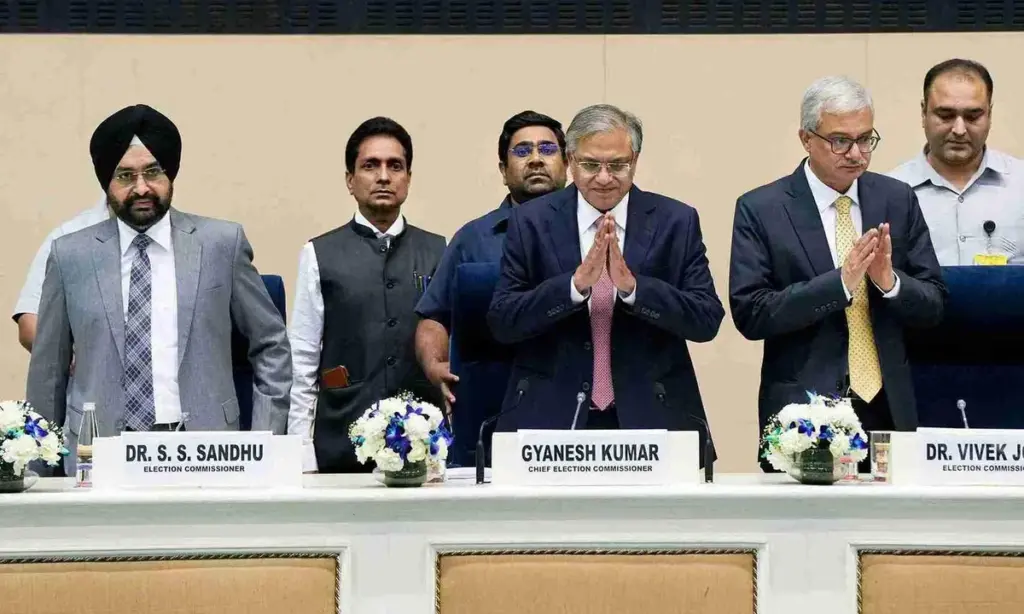
Gyanesh Kumar, the Chief Election Commissioner of India, is under scrutiny as opposition parties seek his removal ahead of upcoming elections.
The numbers
Gyanesh Kumar, the Chief Election Commissioner of India, is currently facing significant political pressure as opposition parties have submitted notices in both Lok Sabha and Rajya Sabha seeking his removal from office. This development comes just weeks before crucial assembly elections scheduled across several states, including Assam, Kerala, Tamil Nadu, and West Bengal.
The assembly elections will take place on April 9, 2026, in Assam, Kerala, and Puducherry, followed by elections in Tamil Nadu on April 23, and West Bengal elections conducted in two phases on April 23 and April 29. The counting of votes for all polls is set for May 4, 2026. With a total of 824 constituencies across five assemblies, approximately 17.4 crore voters are eligible to participate in these elections.
Gyanesh Kumar has emphasized the importance of transparency in the electoral process, stating, “The Election Commission will ensure greater transparency in the counting of votes and announcement of results.” This statement reflects the Commission’s commitment to uphold the integrity of the electoral process amidst growing concerns from opposition parties.
In the context of these elections, the model code of conduct has come into effect immediately with the announcement of the poll schedule. Kumar noted, “The model code of conduct comes into effect immediately and no such announcements could be made henceforth.” This code is designed to ensure a level playing field for all parties involved.
There will be a total of 2,18,807 polling stations established across the four states and one Union Territory, with approximately 25 lakh election officials deployed to manage the electoral process. This extensive logistical operation aims to facilitate a smooth voting experience for the electorate.
In West Bengal alone, there are 6.4 crore voters, with 152 assembly constituencies in the first phase and 142 in the second phase. Meanwhile, Tamil Nadu will see 5.67 crore voters participating in its elections. The term of the assembly will end in West Bengal on May 7, Tamil Nadu on May 10, Assam on May 20, Kerala on May 23, and Puducherry on June 15.
The opposition has accused Gyanesh Kumar of aiding the ruling BJP during the Special Intensive Revision of electoral rolls, raising questions about the impartiality of the Election Commission. As the elections approach, the political landscape remains tense, with observers closely monitoring the situation. Action will be taken as per law, according to Kumar, but details remain unconfirmed.