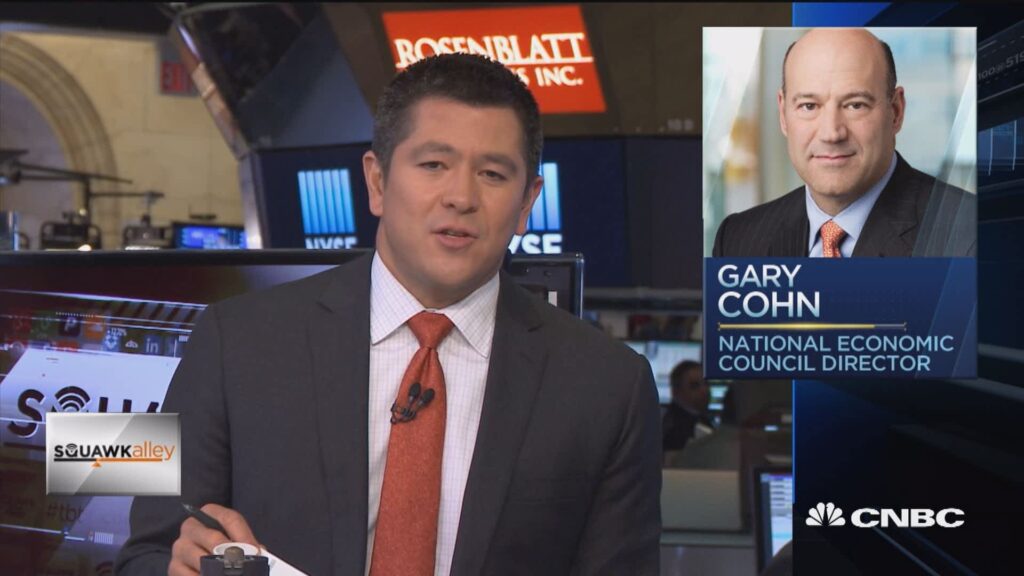
Introduction Gary Cohn, a prominent figure in American economics and former director of the National Economic Council, has played a significant role in shaping U.S. economic policy. His tenure in past administrations, notably under former President Donald Trump, highlighted the influence of Wall Street expertise in governmental decision-making. Understanding Cohn’s impact is crucial for grasping
Introduction
Gary Cohn, a prominent figure in American economics and former director of the National Economic Council, has played a significant role in shaping U.S. economic policy. His tenure in past administrations, notably under former President Donald Trump, highlighted the influence of Wall Street expertise in governmental decision-making. Understanding Cohn’s impact is crucial for grasping the current economic landscape and future directions of U.S. policy.
Background and Career
Cohn was born on August 27, 1960, and graduated from the University of Binghamton. His career began at the investment bank Goldman Sachs, where he spent over 25 years, ultimately rising to the position of President and Chief Operating Officer. His experience on Wall Street provided him with a unique perspective on fiscal matters, trade policies, and market regulations. In 2017, he stepped into the role of director of the National Economic Council, where he aimed to implement policies favoring growth and deregulation.
Key Contributions
During his time in the Trump administration, Cohn was instrumental in pushing through significant tax reforms, resulting in the Tax Cuts and Jobs Act of 2017. This legislation aimed to reduce the corporate tax rate and stimulate investment in the U.S. economy. Cohn advocated for the deregulation of various sectors, arguing that it would promote business expansion and job creation. Despite his efforts, Cohn faced criticism for certain policies, particularly regarding tariffs on steel and aluminum imports that he initially opposed but ultimately supported.
Recent Developments
Since leaving the White House in 2018, Cohn has maintained a presence in both business and public affairs. He has taken on various advisory roles in private equity and has been involved in initiatives addressing economic challenges posed by the COVID-19 pandemic. Recently, Cohn has also been vocal about the need for more inclusive economic policies that address wealth disparities, highlighting the ongoing debates in the socio-economic landscape.
Conclusion
Gary Cohn’s influence on American economic policy is significant and multifaceted. His experience in finance and his tenure in the government underline the importance of collaboration between the private sector and public policy. Looking ahead, Cohn’s insights and actions will likely continue to shape discussions around economic recovery and growth strategies in the U.S. As debates around fiscal policy evolve, understanding the perspectives of experienced economic leaders like Cohn becomes essential for policymakers and citizens alike.