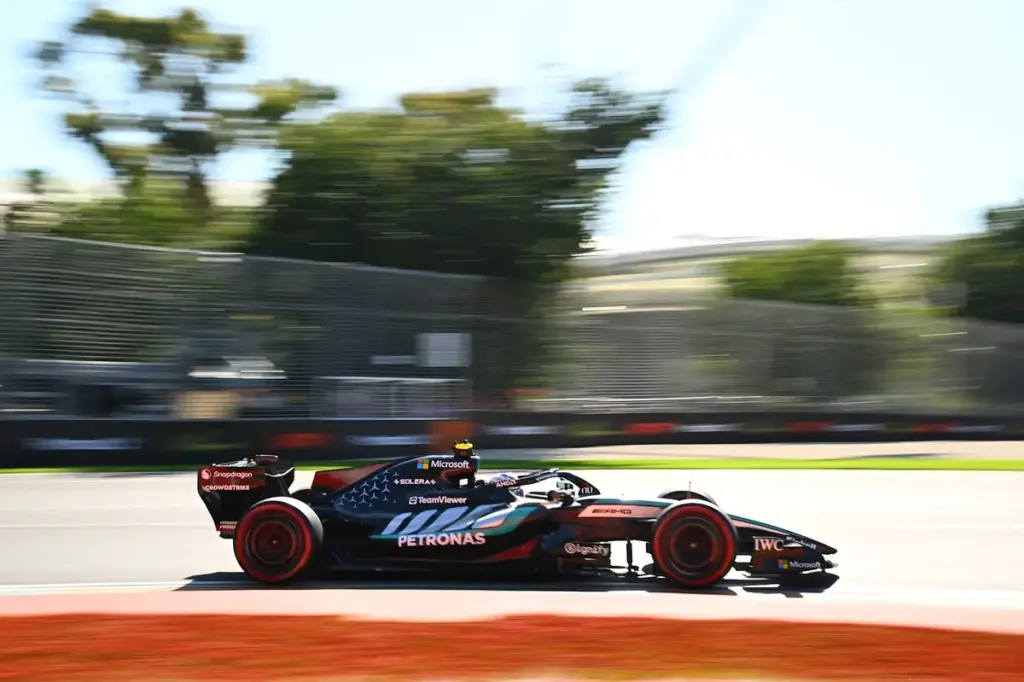
George Russell achieved pole position in the F1 qualifying for the Australian Grand Prix, with notable performances from several drivers.
F1 Qualifying Update from Melbourne
As the sun set over Melbourne on March 7, 2026, anticipation built for the F1 qualifying session ahead of the Australian Grand Prix. The atmosphere was charged, with teams and fans eager to see how the new regulations would impact performance.
In a dramatic turn of events, George Russell of Mercedes clinched pole position, showcasing his skill and speed. He finished with a time that was three tenths of a second quicker than his teammate, Kimi Antonelli, who qualified second. Isack Hadjar rounded out the top three, marking a strong showing for the team.
Oscar Piastri, racing on home soil, qualified fifth, while Lando Norris followed closely in sixth. Both drivers expressed their frustrations with the new F1 regulations, with Norris stating, “It sucks,” and highlighting the challenges posed by the current formula.
Max Verstappen, a favorite heading into the session, faced significant setbacks, finishing 20th after a crash that left him unable to compete for a higher position. His comments reflected his disappointment, stating, “The formula is just not correct,” emphasizing the struggles many drivers have encountered this season.
The qualifying results revealed a stark contrast in performance among teams. Mercedes dominated, with their drivers finishing first and second, while Williams and Aston Martin struggled, with positions 15th and 21st for Williams and 17th and 22nd for Aston Martin. Alpine drivers also faced difficulties, finishing 14th and 16th.
Fernando Alonso, another veteran in the sport, finished 2.7 seconds off the pace, indicating the challenges that come with adapting to the new regulations. Meanwhile, Alex Albon managed to secure 15th place, a modest result for Williams.
The session highlighted the ongoing adjustments teams must make in response to the controversial rules introduced this season. The split between power from the combustion engine and electrical energy stands at 50 percent, complicating strategies for teams as they navigate the evolving landscape of Formula One.
As the teams prepare for the race, the focus will be on how drivers adapt to the conditions and the performance of their cars under the new regulations. The implications of this qualifying session will resonate throughout the season, influencing team strategies and driver morale.
With the race day approaching, fans are eager to see if Russell can convert his pole position into a victory, while others will be watching to see if Verstappen can recover from his qualifying woes.