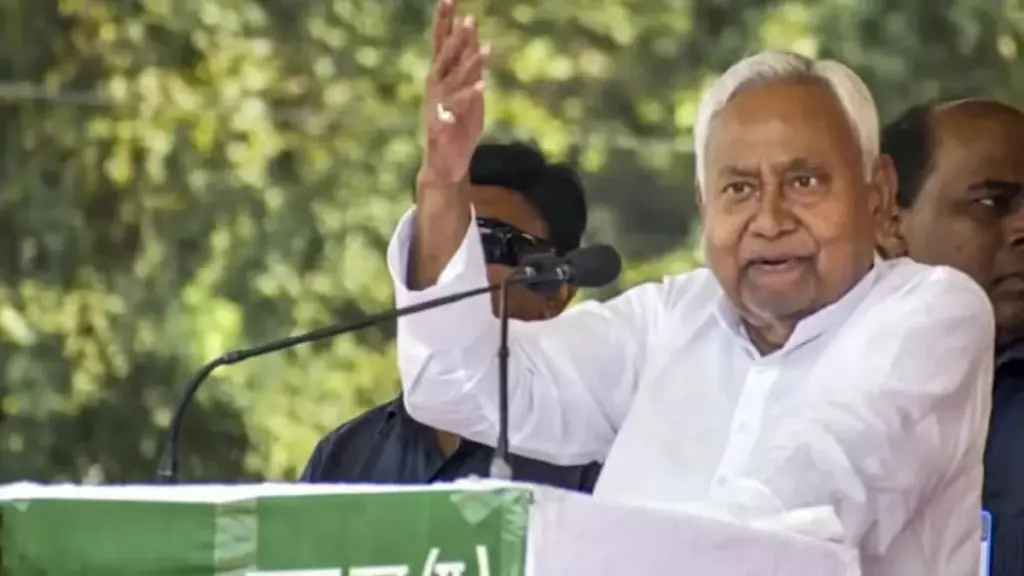
Bihar CM Nitish Kumar has announced his decision to step down from his role as Chief Minister, transitioning to the Rajya Sabha.
Bihar CM Nitish Kumar Steps Down from Chief Minister Role
The political landscape of Bihar is set for a significant transformation as Chief Minister Nitish Kumar has announced his decision to step down from his role, transitioning to the Rajya Sabha. This move comes after over two decades of leadership, during which Kumar has served as Chief Minister ten times, shaping the state’s governance with a focus on infrastructure development and social welfare.
Kumar’s announcement has sparked discussions regarding the future of Bihar’s political dynamics. The Bharatiya Janata Party (BJP) is expected to nominate a candidate to succeed him as Chief Minister, following the NDA’s successful performance in the 2025 Bihar Assembly elections, where they secured 202 out of 243 seats. The BJP emerged as the single largest party with 89 seats, while Kumar’s Janata Dal (United) (JD(U)) won 85 seats.
In a statement reflecting his aspirations, Kumar expressed, “It has been my desire to become a member of both Houses of the Bihar Legislature as well as both Houses of Parliament.” His decision to file his Rajya Sabha nomination on March 5, 2026, indicates a strategic shift rather than a complete withdrawal from politics. Observers note that this transition aligns with the four-decade pattern of the BJP’s growth in the region.
However, Kumar’s departure from the Chief Minister’s office raises questions about the future of the JD(U) within the ruling coalition. Some party workers have protested against his potential move to the Rajya Sabha, indicating a divide in sentiments among his supporters. Analysts suggest that without Kumar at the helm in Patna, the JD(U) may struggle to maintain its independent identity within the alliance.
Throughout his political career, Kumar has navigated alliances with both the BJP and the Congress-led opposition, showcasing his adaptability in Bihar’s complex political environment. His governance model has been characterized by a commitment to development, but the uncertainties surrounding his departure leave many wondering how the party will fare without his leadership.
Details remain unconfirmed regarding the exact reasons for Kumar’s decision to step down. The implications of this transition for Bihar’s political landscape are still unfolding, and the future remains uncertain as the state prepares for a new chapter in its governance.
As Bihar moves forward without Nitish Kumar’s leadership, the political dynamics are poised for change. Observers will be closely watching how the BJP and JD(U) navigate this transition and what it means for the state’s governance and political alliances.