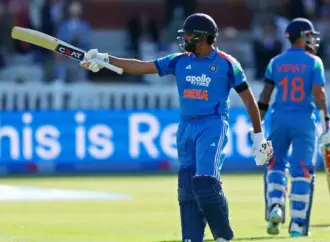
Kiran More and three others have been disqualified from the BCA elections due to tenure violations. This ruling follows a Supreme Court judgment on candidate eligibility.
Before the recent ruling, Kiran More and three others were expected to contest in the Baroda Cricket Association (BCA) elections, having their nomination papers accepted by the election officer. This acceptance, however, was challenged by petitioners who argued that the candidates did not meet eligibility criteria established by the Supreme Court of India.
On March 16, 2026, the Gujarat High Court delivered a decisive ruling, disqualifying More and his associates from the elections. The court set aside the election officer’s earlier decision to accept their nominations, citing a Supreme Court judgment that restricts candidates with a cumulative tenure of nine years in a cricket body from contesting.
Justice Niral R Mehta stated, “Consequently, the action of accepting the nomination forms of the respondents for the post of office bearers and publication of their names in the final list of candidates dated February 22 by the election officer (EO) is set aside.” This ruling directly impacts the electoral landscape of the BCA, as it enforces strict adherence to governance rules.
The Supreme Court’s judgment also mandates a cooling-off period of three years after two consecutive terms, which the disqualified candidates failed to observe. The court directed the election officer to proceed with the election process in accordance with the law, ensuring that only eligible candidates participate.
The petitioners had submitted written objections on January 20, prior to the election officer’s publication of the final list of candidates. Despite these objections, the election officer proceeded with the election process, which has now been overturned by the court’s ruling.
In their defense, the respondents argued that the BCCI and BCA should not be equated in terms of governance, as the BCCI is a national body with broader control over cricket, while the BCA governs at a more localized level. However, this argument did not sway the court’s decision.
The implications of this ruling extend beyond the immediate disqualification of More and his associates. It underscores the importance of compliance with governance regulations in cricket associations, potentially setting a precedent for future elections.
As the BCA prepares for its elections under the new directives, the focus will be on ensuring that all candidates meet the eligibility criteria established by the Supreme Court. This ruling is a significant moment in the ongoing evolution of cricket governance in India.
Details remain unconfirmed regarding the next steps for the BCA and how this ruling will affect its future elections.