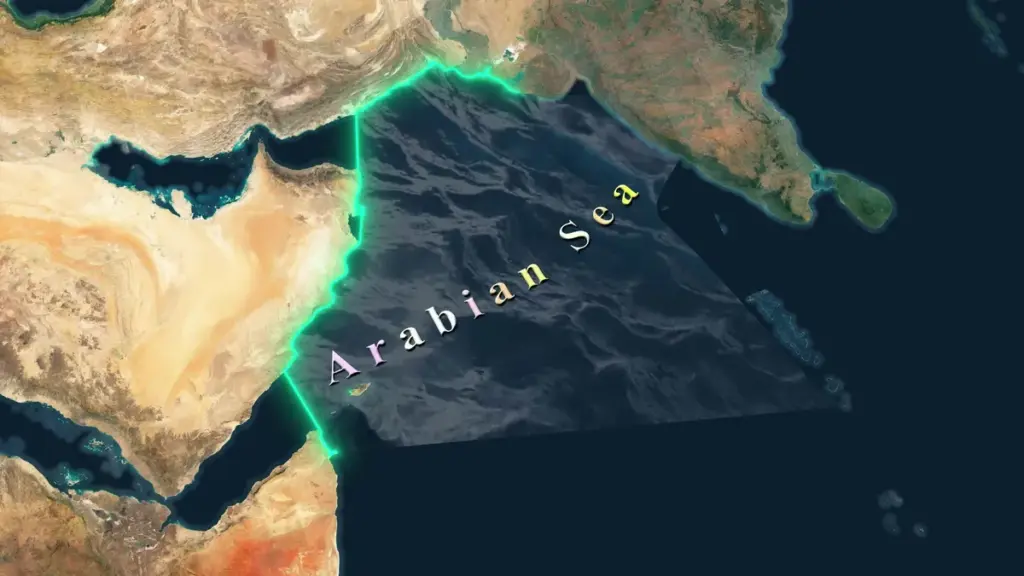
Recent drone strikes at the Port of Salalah in Oman highlight the escalating tensions in the Arabian Sea, impacting global shipping and energy markets.
What are the implications of recent events in the Arabian Sea?
The Arabian Sea is currently at the center of significant geopolitical tensions, particularly following a drone strike on the Port of Salalah in Oman on March 11, 2026. This incident raises critical questions about the safety and stability of maritime operations in the region. The strike ignited two fuel storage tanks, although fortunately, no casualties were reported among port workers or local residents.
Supporting this situation is the fact that the Arabian Sea serves as a vital maritime hub, connecting Asia, Europe, and Africa. The disruption of operations at Salalah has prompted shipping companies to reassess safety conditions, potentially leading to increased shipping costs and delays. The ongoing conflict in the Middle East has already caused significant disruptions to global oil supply and has heightened concerns about the safety of oil infrastructure across the Gulf.
What led to this moment?
The backdrop to these events is the escalating conflict between Iran, the United States, and Israel, which has reached critical maritime hubs in the Gulf. The International Space Station (ISS) recently captured a striking nighttime image of India while orbiting approximately 400 kilometers above the Earth at a speed of 28,000 kilometers per hour. This image serves as a reminder of the region’s strategic importance amidst rising tensions.
As the conflict unfolds, the India-Middle East-Europe Economic Corridor (IMEC) has emerged as a potential solution to logistical challenges. It is expected to reduce logistical costs for goods shipped from India to Europe by up to 30% and transportation time by 40%. However, the ongoing tensions complicate the feasibility of such initiatives. Experts like Harsh Pant have noted that the current conflict underscores the necessity of IMEC, suggesting that its outcome will significantly influence the corridor’s trajectory.
What comes next?
While the IMEC corridor presents a promising avenue for trade, the immediate future remains uncertain. The drone strike at Salalah has raised alarms about the safety of maritime routes and energy infrastructure in the region. As shipping companies navigate these challenges, the exact impact of the drone strike on global shipping and energy markets remains unclear. Details remain unconfirmed.
Furthermore, analysts are closely monitoring the situation, particularly the implications of the U.S.-Israel war with Iran on regional energy infrastructure and maritime trade routes. The outcome of this conflict could reshape the dynamics of trade and logistics in the Arabian Sea, making it a focal point for international attention.