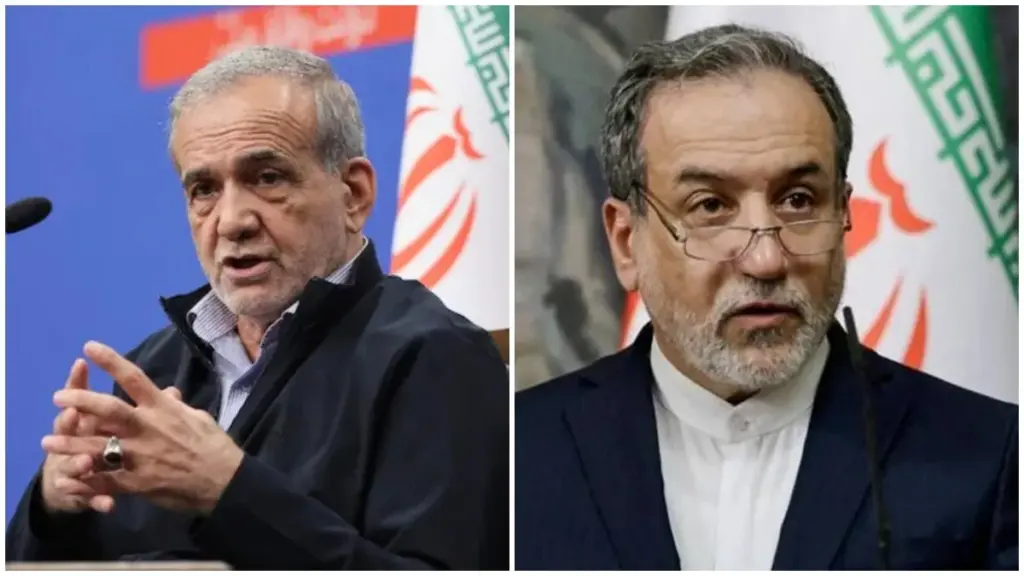
Iran is experiencing significant leadership turmoil as efforts to dismiss Foreign Minister Abbas Araghchi mount, with accusations of his ties to the Revolutionary Guard.
“Pezeshkian has told close associates that he will dismiss Araghchi if such conduct continues,” said President Masoud Pezeshkian, highlighting the escalating tensions within Iran’s political landscape.
On May 1, 2026, in Tehran, Foreign Minister Abbas Araghchi finds himself at the center of a storm as internal rifts deepen over his management of negotiations with the United States. Accusations swirl that he has aligned too closely with Ahmad Vahidi, the commander of the Revolutionary Guard.
This context matters because it underscores a broader struggle for influence within Iran’s leadership. The Revolutionary Guards have been increasingly asserting control over key positions, particularly during these critical negotiations surrounding Iran’s nuclear program.
President Pezeshkian and Parliament Speaker Mohammad Bagher Ghalibaf are leading the charge against Araghchi. Ghalibaf even resigned from his position as head of the negotiating team after facing backlash for involving nuclear discussions in talks with the US.
Araghchi’s recent actions have fueled discontent. He coordinated directly with Vahidi without informing Pezeshkian, which has led to frustration among top officials. This behavior raises questions about his commitment to diplomatic processes and regional stability.
A group of lawmakers aligned with hardline politician Saeed Jalili has also refused to support the negotiating team, further complicating the situation. Their stance reflects a significant division within Iranian politics regarding how to approach US negotiations.
In a recent trip to Islamabad on April 24, Araghchi traveled alone to deliver Tehran’s proposal directly to Pakistani officials—a move that some interpret as undermining collective decision-making.
The stakes are high; the United States rejected Tehran’s proposal delivered by Araghchi shortly after. This rejection illustrates not only the challenges in Iran-US negotiations but also the fragile nature of Iran’s internal political dynamics.
Despite these challenges, Araghchi remains optimistic about international relations. He stated that cooperation between Iran and Russia continues to expand amid regional uncertainty, indicating a shift in alliances that could reshape geopolitical landscapes.
The next expected developments include potential moves from Pezeshkian and Ghalibaf regarding Araghchi’s future in office. As tensions rise, observers will be watching closely for any signs of change in Iran’s negotiation strategy or leadership structure.