UCO Bank’s shareholders approved a three-year extension for Rajendra Kumar Saboo as Executive Director during an Extraordinary General Meeting.
What does the recent Extraordinary General Meeting (EGM) of UCO Bank signify for its leadership and future direction? On March 16, 2026, shareholders voted to extend Rajendra Kumar Saboo’s tenure as Executive Director by three years, reflecting confidence in his leadership during a period of financial growth.
The EGM, chaired by Non-Executive Chairman Aravamudan Krishna Kumar, was a pivotal moment for the bank. UCO Bank has been navigating a challenging financial landscape, yet it reported a net profit of ₹2,444.99 crore for the fiscal year 2024-2025, marking a 48% increase from the previous year. This growth is significant, especially as the percentage of gross non-performing assets has decreased to about 2.7%.
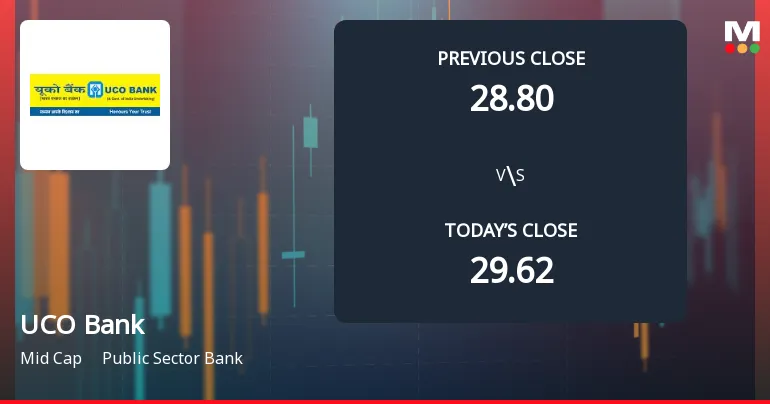
Despite these positive indicators, UCO Bank’s share price opened at ₹24.7 on March 2, 2026, which is a 52-week low, and the stock experienced a day change of -2.84%. This volatility raises questions about market confidence and the bank’s strategic direction moving forward.
Founded in 1943 by Ghanshyam Das Birla, UCO Bank has grown to operate over 3,300 branches and 2,600 ATMs, including international branches in Singapore and Hong Kong. The bank is also planning to issue additional equity shares to reduce government ownership to 75%, a move that could reshape its governance structure.
As UCO Bank continues to evolve, the implications of Rajendra Kumar Saboo’s extended leadership will be closely monitored by stakeholders. The bank’s ability to maintain profitability while addressing market challenges will be crucial in the coming years.
Details remain unconfirmed regarding the specific strategies that will be implemented under Saboo’s extended tenure, but the focus on reducing government ownership and enhancing shareholder value is expected to be a priority.