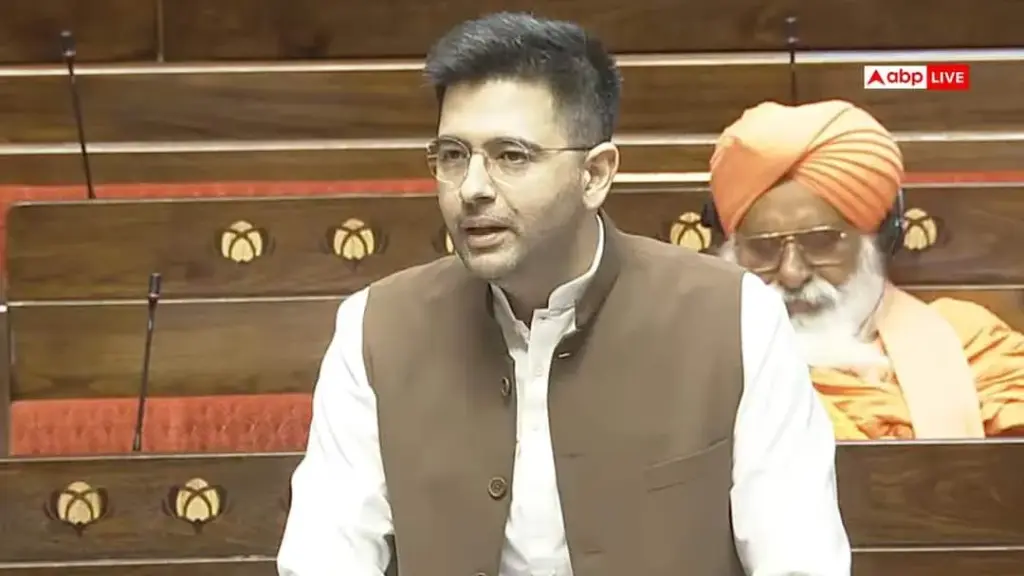
Raghav Chadha’s recent comments in Rajya Sabha highlight his complex relationship with Harivansh amid political changes. What does this mean for AAP?
Raghav Chadha’s recent comments in the Rajya Sabha have stirred conversation. His remarks came during the election of Harivansh as Deputy Chairman, a position he secured unopposed. This context matters because it sets the stage for understanding Chadha’s sentiments and potential political maneuvering.
During this session, Chadha congratulated Harivansh, stating, “I congratulate Harivansh ji on his third term as Deputy Chairman.” Such acknowledgments are customary in politics, yet they often carry deeper implications.
Chadha’s relationship with Harivansh is not straightforward. He described it as “bittersweet,” hinting at underlying tensions or disagreements. But why would a politician use such a loaded term? It suggests that while there may be mutual respect, there are also unresolved issues that could impact their collaboration.
He further remarked, “I will try to make this bittersweet relationship a sweet one,” indicating his desire to improve their rapport. This statement opens up questions about how personal relationships can influence political alliances.
Additionally, Chadha made a request that stood out: “If you could give us a couple of extra minutes after the bell rings, we could present our points more strongly.” This plea not only underscores his commitment to presenting AAP’s agenda but also reflects the urgency he feels in making an impact.
The backdrop of these remarks is significant. Recently, Raghav Chadha was removed from his position as Deputy Leader within the Aam Aadmi Party (AAP). This change raises concerns about internal dynamics within the party and how they might affect its future direction.
Observers are now left pondering what this means for both Chadha and AAP moving forward. Will these personal revelations lead to a shift in strategy or alliances? Or will they simply remain footnotes in a larger political narrative?
As political analysts sift through these developments, the implications for AAP and its leadership are becoming clearer. The party may need to navigate not only external pressures but also internal relationships that could shape its trajectory.
Details remain unconfirmed regarding how these dynamics will unfold in upcoming sessions. Yet, one thing is certain: Raghav Chadha’s words have sparked discussions that extend beyond mere parliamentary procedure.