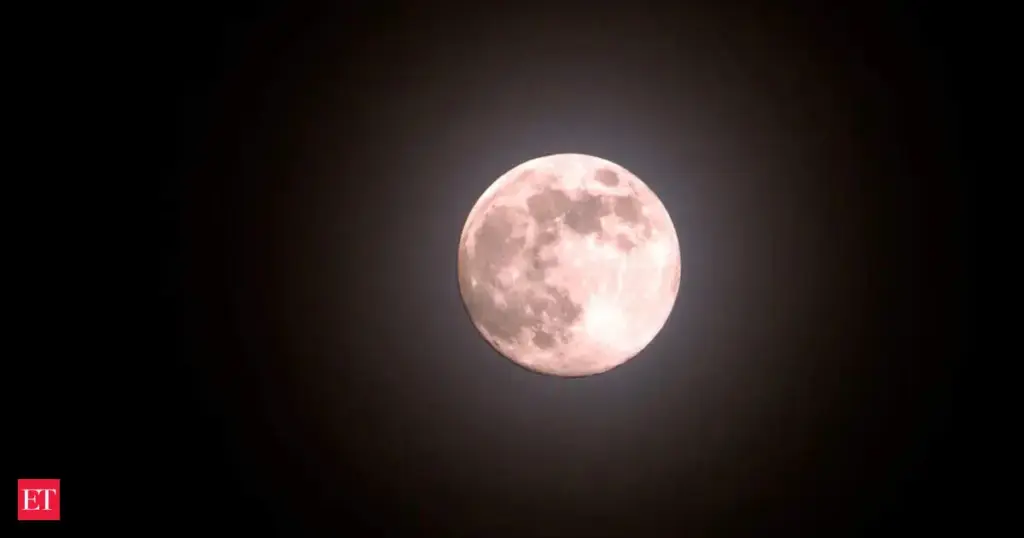
The Pink Moon, set to occur on April 1-2, 2026, is a fascinating astronomical event with deep cultural roots and seasonal significance.
The wider picture
The Pink Moon is an intriguing astronomical event that will take place on April 1-2, 2026. This lunar phenomenon is not only a visual spectacle but also carries cultural significance, marking the transition from winter to spring. The name ‘Pink Moon’ was first used by the Algonquin Indians and later documented in the Old Farmer’s Almanack, highlighting its historical roots in spring traditions.
During this event, the Moon will appear bright and nearly full throughout the night, with its peak occurring at 02:11 UTC on April 2, 2026, which translates to 7:41 AM IST for viewers in India. The Pink Moon will be visible across the country, provided that the skies are clear, allowing many to witness this celestial display without the need for telescopes.
Interestingly, despite its name, the Moon will not actually take on a pink hue. The term ‘Pink Moon’ derives from the blooming of moss pink, a wildflower that signifies the arrival of spring. This connection to nature emphasizes the themes of growth and renewal associated with the lunar event.
As the date approaches, excitement is building among astronomy enthusiasts and the general public alike. Observers are encouraged to take advantage of this opportunity to appreciate the beauty of the night sky and the changing seasons. The Pink Moon serves as a reminder of the cyclical nature of life and the importance of acknowledging the shifts in our environment.
Initial reactions from local astronomers and cultural commentators indicate a strong interest in the event. Many are planning gatherings and viewing parties to celebrate the Pink Moon, fostering a sense of community and shared experience. The event is expected to draw attention not only for its visual appeal but also for its cultural significance, as people reflect on the traditions associated with the lunar cycle.
Looking ahead, observers and officials anticipate that the Pink Moon will inspire discussions about astronomy and nature, encouraging more people to engage with the night sky. As interest in celestial events continues to grow, the Pink Moon stands out as a particularly meaningful occasion, linking past traditions with present-day celebrations.
In summary, the Pink Moon on April 1-2, 2026, is poised to be a significant event, both astronomically and culturally. As the date approaches, many will look to the skies, celebrating the beauty of the Moon and the arrival of spring. The name ‘Pink Moon’ has nothing to do with the Moon’s colour, but rather reflects the vibrant life that emerges during this season.