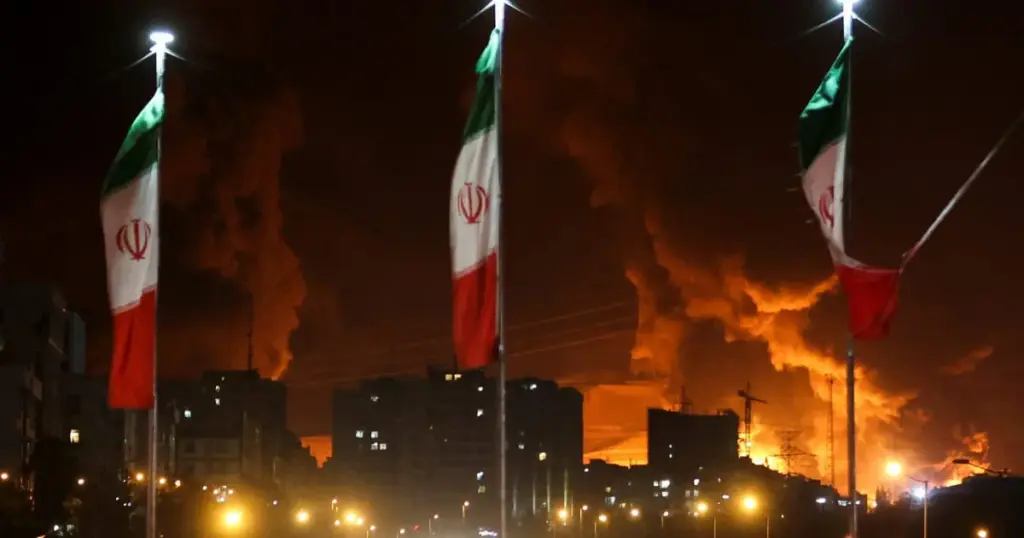
The ongoing conflict in Iran has triggered a global energy shock, with the closure of the Strait of Hormuz severely impacting oil supplies.
The recent escalation of conflict in Iran has resulted in a significant global energy shock, primarily due to the closure of the Strait of Hormuz. This strategic waterway is crucial for oil transportation, and its blockage has prompted the International Energy Agency to release 400 million barrels from its strategic reserve.
The conflict intensified following the U.S. and Israeli attack on Iran on February 28, 2026, which killed Supreme Leader Ayatollah Ali Khamenei. In retaliation, Iran has targeted U.S. military facilities and civilian infrastructure in Gulf states, leading to the deaths of over 1,500 civilians, according to Iran’s ambassador to the United Nations.
As a result of the ongoing violence, 10 foreign tankers and 18 Indian vessels are currently stranded due to the closure of the Strait of Hormuz. This disruption has raised concerns about the reliability of global oil supplies, particularly for countries like India, which has seen its imports of Iranian crude oil drop from around 23-24 million tonnes annually to zero since May 2019.
However, there is a glimmer of hope for India, as it is expected to receive its first direct shipment of Iranian crude oil by April 4, 2026, amounting to 600,000 barrels. This marks a significant shift in India’s energy strategy, which has been heavily reliant on Russian crude, projected to constitute 35-40% of its oil imports in 2024-25.
Former President Donald Trump has publicly stated that securing the Strait of Hormuz is not a priority for the U.S., urging allies to “go get your own oil.” This statement underscores the shifting dynamics in international energy politics as countries reassess their energy dependencies.
Iran’s Foreign Minister Abbas Araghchi has characterized the attack on Iran as “an act of war,” indicating the potential for further escalation in the region. The situation remains fluid, with the long-term implications of India’s renewed oil imports from Iran still uncertain.
Details remain unconfirmed regarding the exact impact of the closure of the Strait of Hormuz on global energy supplies. As nations navigate these turbulent waters, the stakes for energy security continue to rise, highlighting the intricate connections between geopolitics and energy markets.