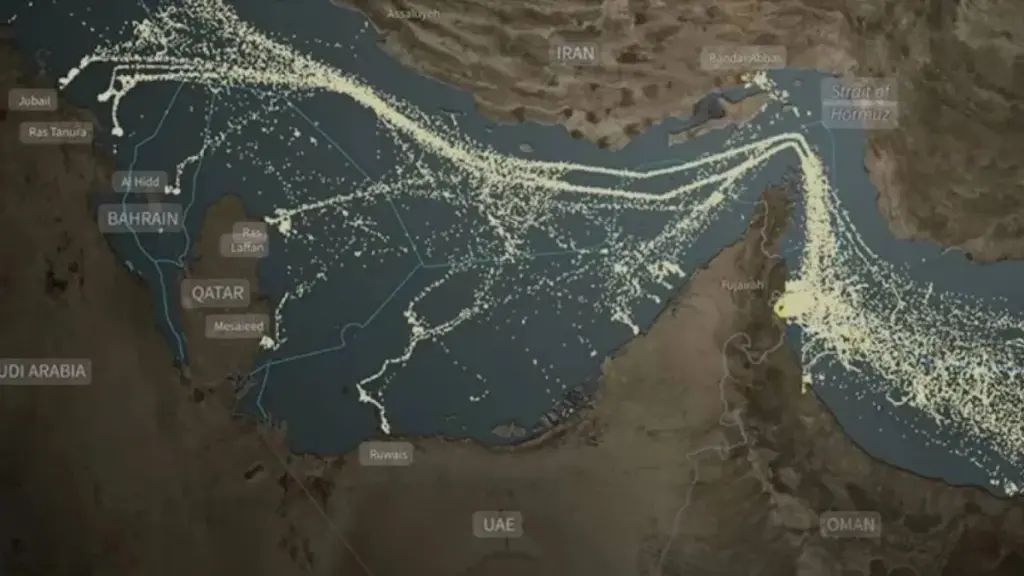
Tensions in the Iran Hormuz Strait have escalated, impacting global oil prices and maritime navigation. Iran has denied any intentions to close the strait.
Current Situation in the Strait of Hormuz
The Strait of Hormuz has long been recognized as a critical maritime passage for global oil and LNG shipments. Prior to recent developments, there was a general expectation that the strait would remain open, facilitating the steady flow of oil from the Gulf region to international markets.
However, a decisive moment occurred when Iran’s government announced that ships belonging to the United States, Israel, European countries, or their allies would not be allowed to pass through the strait. This declaration raised alarms about potential disruptions to maritime navigation.
Immediate Effects
As a result of these tensions, approximately 300 oil tankers have become stranded in the Strait area due to the ongoing conflict. This situation has led to a significant increase in crude prices, which have climbed more than 15 percent since the fighting began.
On March 1, only four crude tankers were able to transit through the Strait, a stark contrast to the average of 24 vessels per day since January. This dramatic reduction highlights the immediate impact of the heightened tensions on global oil supply.
Expert Perspectives
Iran has denied reports of closing the Strait of Hormuz, with Saeed Khatibzadeh, Iran’s Deputy Foreign Minister, stating, “We have not yet closed the Strait of Hormuz. If we are going to close it, we are going to announce it… It has not been closed by us. We have no intention to do it until further notice.” This statement aims to reassure international markets while acknowledging the precarious situation.
In contrast, the Islamic Revolutionary Guard Corps has asserted that during times of war, passage through the Strait will be under their control, indicating a shift in operational authority over this vital corridor.
Furthermore, Seyed Abbas Araghchi, an Iranian official, claimed, “The US has perpetrated an atrocity at sea… Frigate Dena, a guest of India’s Navy carrying almost 130 sailors, was struck in international waters without warning.” This accusation underscores the escalating military tensions in the region.
Looking Ahead
As negotiations between China and Iran continue regarding safe oil and LNG passage through the Strait, the exact timeline for these discussions remains unclear. The long-term implications of the conflict on global energy supply chains are also uncertain.
Details remain unconfirmed, but the situation in the Iran Hormuz Strait continues to evolve, with potential ramifications for global energy markets and maritime security.