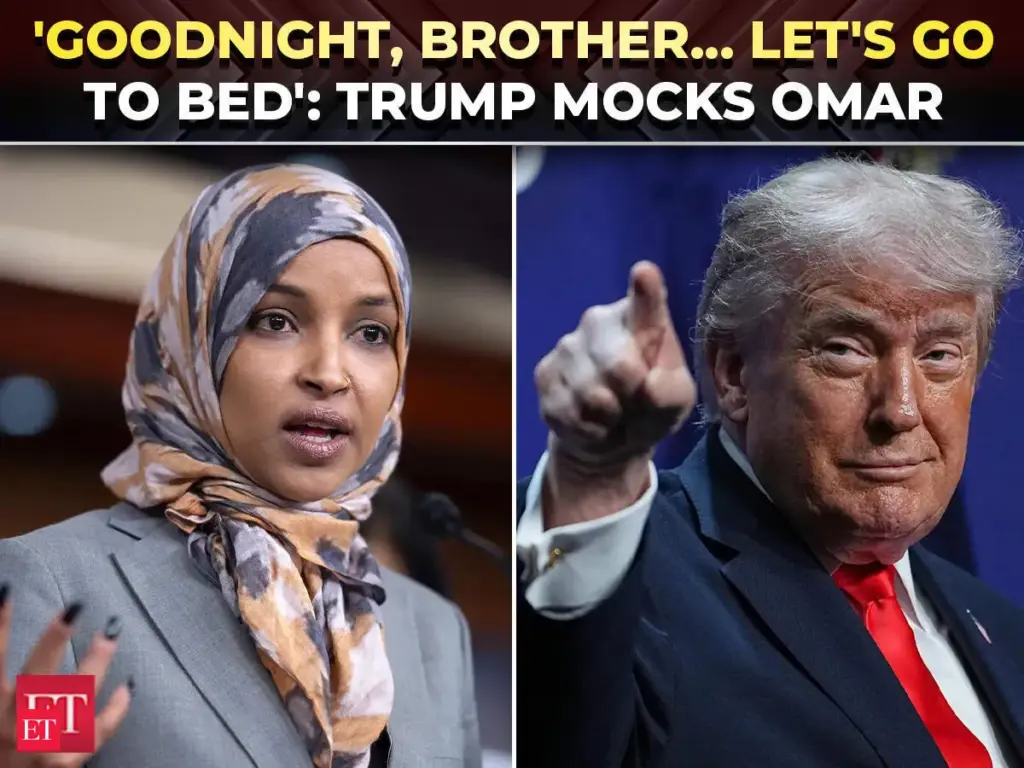
Donald Trump’s recent comments about Ilhan Omar’s alleged marriage to her brother have sparked renewed criticism of his political rhetoric, particularly towards immigrants.
At a recent Trump rally in Florida, former President Donald Trump made headlines by mocking Ilhan Omar, a Democratic Representative for Minnesota, claiming she married her brother. This statement has reignited controversy surrounding Trump’s rhetoric towards immigrants and raised questions about the implications for Muslim representation in the US Congress.
Before this development, the immigration debate was already fraught with tension. Many viewed Trump’s previous comments about immigrants as inflammatory. Yet his latest remarks have taken that tension to new heights. The decisive moment came when Trump labeled Omar a ‘phony’ and alleged that her marriage was ‘totally illegal.’ His description of Somalia as a ‘filthy’ and ‘disgusting’ place only added fuel to the fire.
This shift in tone has had immediate effects on both Trump and Omar. Trump’s supporters may rally around his comments, seeing them as a continuation of his hardline stance on immigration. On the other hand, Omar responded sharply, calling his comments an ‘unhinged rant’ and highlighting his own legal troubles—34 felony convictions—implying that he lacks credibility.
That context matters because it underscores how political rhetoric can influence public perception. Experts argue that such statements not only affect individual politicians but also shape broader narratives around race and immigration in America. According to analysts, Trump’s choice of words reflects a strategy aimed at consolidating his base while alienating others.
Moreover, this controversy isn’t new; rumors about Omar marrying her brother have circulated since 2016. However, Trump’s public amplification of these claims brings them back into the spotlight. It raises critical questions about how political discourse interacts with personal lives—especially for marginalized groups like Muslims in America.
Ilhan Omar’s position as one of the first Muslims elected to Congress adds another layer to this discourse. Her experiences reflect broader issues concerning representation and discrimination in politics today. As she continues to navigate these challenges, her responses will likely resonate with many who feel targeted by similar rhetoric.
The ongoing immigration debate has profound implications for how America views diversity and inclusion. As political figures like Trump use divisive language, it becomes crucial to examine the impact of such rhetoric on communities across the nation. The stakes are high—not just for individual politicians but for the very fabric of American society itself.