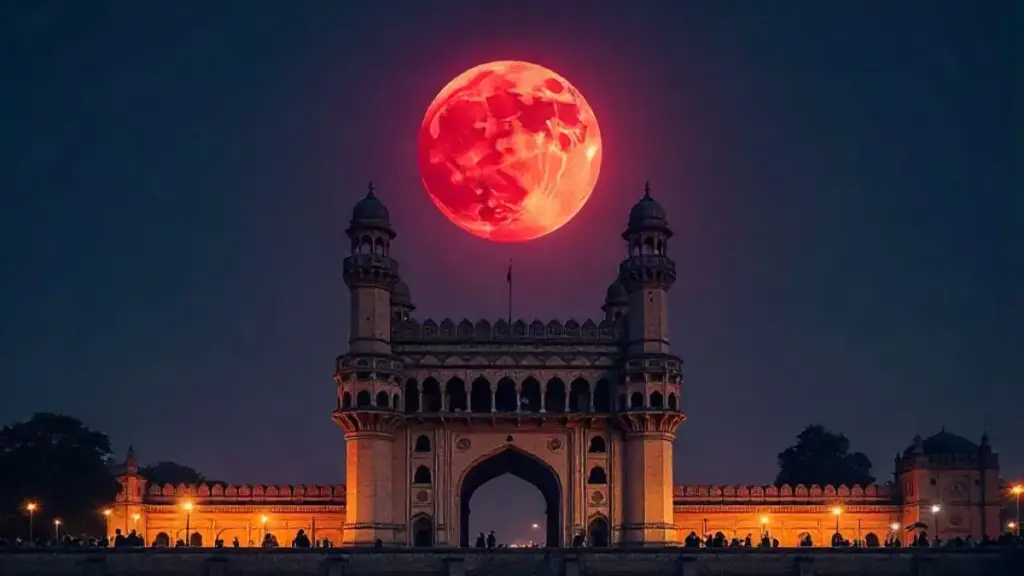
The upcoming lunar eclipse on March 3, 2026, will feature significant phases and timings, impacting viewers across India.
Understanding the Lunar Eclipse
A lunar eclipse occurs when Earth moves between the Sun and the Moon, casting its shadow on the Moon. This celestial event has long fascinated humanity, often steeped in cultural significance and scientific interest. Prior to the upcoming event on March 3, 2026, many enthusiasts and casual observers alike were eager to learn about the grahanam timings today, hoping to witness the spectacle.
Key Timings for the Eclipse
On March 3, 2026, the Chandra Grahan will be observed across India, with the Sutak Kaal beginning at 6:23 AM. This period is traditionally considered inauspicious for certain activities, as many believe it marks the time when the eclipse’s effects start to manifest. The penumbral phase of the eclipse will commence at 2:14 PM, followed by the partial eclipse starting at 3:30 PM.
Phases of the Eclipse
The totality phase, where the Moon is completely covered by Earth’s shadow, will begin at 4:58 PM and reach its maximum at 5:25 PM. This is the moment when observers can expect the most dramatic visual effects, often referred to as the Blood Moon due to the reddish hue the Moon takes on. Totality will end at 5:32 PM, with the partial eclipse concluding at 6:47 PM and the penumbral phase wrapping up at 7:53 PM.
Visibility Across India
The visibility of the eclipse will vary across the country. While some regions will experience a full view, others may only see a partial eclipse. Notably, the northeastern states of India are expected to witness the most dramatic views of the event, making it a prime location for skywatchers.
Expert Perspectives
Experts emphasize the importance of observing such celestial events, not only for their beauty but also for the scientific insights they provide. The Chandra Grahan on March 3, 2026, is a reminder of the intricate dance of celestial bodies and their impact on Earth. The timing of the Sutak Kaal and the various phases of the eclipse are crucial for those planning to engage in rituals or simply enjoy the sight.
As the date approaches, many will prepare to witness this remarkable event. The grahanam timings today serve as a guide for enthusiasts and casual observers alike, ensuring that they do not miss the opportunity to experience the lunar eclipse. With the excitement building, the anticipation of the eclipse is palpable, and it promises to be a memorable occasion for all who participate.