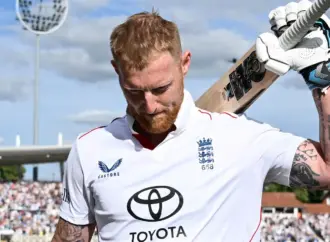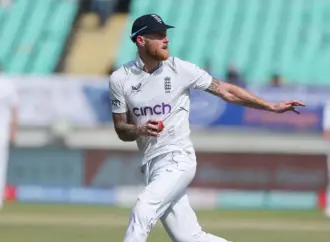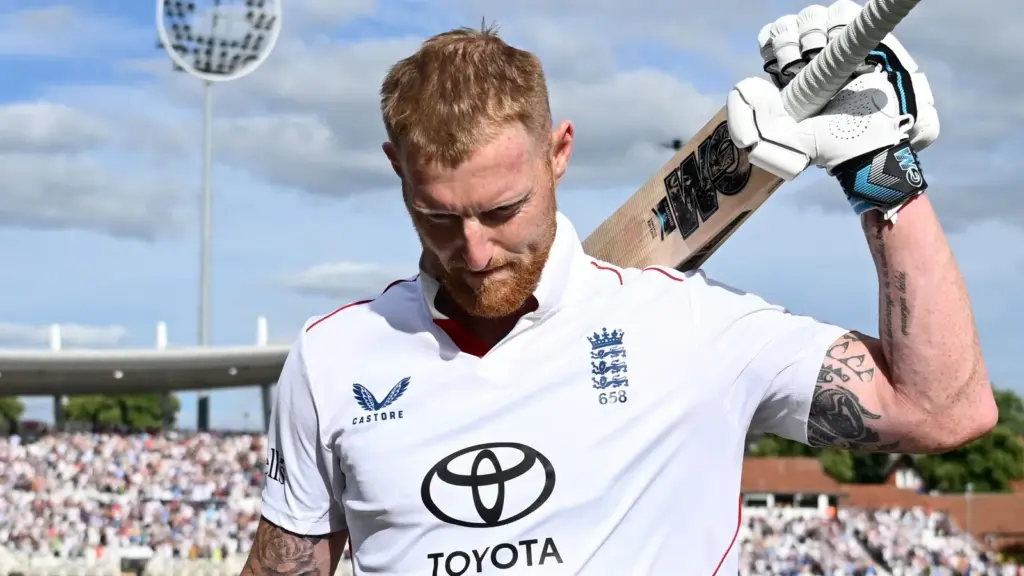
Ben Stokes’ illustrious 15-year England career ends with a series defeat against New Zealand at Trent Bridge. His four-year captaincy concludes with a 2-1 serie
Ben Stokes‘ international career for England concluded with a series defeat against New Zealand, who secured victory in the third and deciding Test on the final day in Nottingham. England’s 160-run loss at Trent Bridge resulted in a 2-1 series reverse, marking the end of Stokes’ four-year captaincy reign with his first home defeat and concluding his 15-year international career.
The announcement of Stokes’ retirement came on the day before the final day’s play. Following this news, England found themselves in a difficult position, having slumped to 103-4 by the close of day four while chasing a target of 373 runs. Any hopes of a prolonged fight on the final day were quickly diminished.
Final day’s play
The fourth over of the final day saw Emilio Gay depart, and crucially, Joe Root was run out by a direct hit from Henry Nicholls. Despite these early setbacks, Jamie Smith and Gus Atkinson managed to form a battling stand of 75 runs, which ended when Atkinson was dismissed just before lunch.
Smith went on to complete his second half-century in 11 months. However, Josh Tongue was run out by a direct hit from Mitchell Santner, and shortly after, Smith was caught at long-off, leading to England being bowled out for 212. This outcome secured a notable series win for New Zealand, their fourth in England.
The Black Caps were the last visiting team to win a series in England in 2021 and are now the first tourists to win a series of three or more Tests in the country in 14 years. This victory is particularly significant as New Zealand achieved it despite being heavily affected by injuries.
Stokes’ dramatic exit
Stokes’ retirement announcement, made mid-match, surprised the cricketing world. On the fourth day of the series decider, a statement confirmed that the player would be stepping away from international cricket at the conclusion of the match. Despite the impending defeat in his 122nd and final Test, Stokes’ dramatic exit garnered significant attention.
During his final bowling spell, Stokes took a wicket, dismissing Zak Foulkes, which led to his teammates celebrating with him. After tea, both the England side and New Zealand’s not-out batters formed a guard of honour for him. In a final act, Stokes promoted himself to open the batting, moving from his usual position at number seven.
He batted for 20 balls, hitting two sixes before being dismissed for 30 runs, caught at midwicket from Foulkes’ bowling. Stokes had informed the England team of his decision in a passionate address before the start of play on Sunday. He will continue to play for Durham, but he admitted that the responsibility of the England captaincy had led to burnout.
England’s challenges ahead
The conclusion of Stokes’ career leaves England facing significant questions. The team is without a captain and must now contemplate a future without one of its key all-round players. The optimism that followed their victory over New Zealand in the first Test has diminished, and the team has experienced seven defeats in their last nine Tests, extending a period without a series win since 2024.
The team’s batting performance on Sunday evening was described as chaotic, driven by a desire to make an impact on the target. This recklessness was contrasted by a more orthodox approach on Monday. The game was effectively decided early on the final day, with key wickets falling rapidly.
New Zealand’s victory is a testament to their disciplined approach, particularly their electric fielding on the final day. They won the series despite the retirement of their own prominent player, Kane Williamson, after the first Test. Different players, including Glenn Phillips, Daryl Mitchell, Matt Henry, and Tom Blundell, made important contributions throughout the series.
England is scheduled to begin a white-ball series against India on Wednesday, which will provide a swift return to action following the Test series defeat.
Read Also
Source: bbc.com