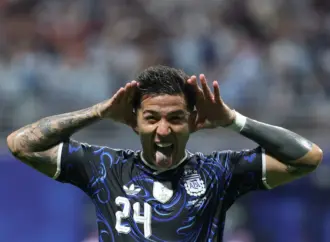
Allegations of favouritism towards Lionel Messi and Argentina by FIFA surface after their World Cup semi-final win against England. Explore the controversy.
Allegations of Favouritism Surface
Lionel Messi, a prominent figure in football, and the Argentina national team have become the subject of claims alleging favouritism by FIFA. These accusations have gained traction among some World Cup observers, particularly after Argentina advanced to the final by defeating England.
Social media platforms have seen a surge of content, including memes, suggesting a close relationship between Messi and FIFA President Gianni Infantino. Some posts have garnered significant attention, with one on X receiving over 1 million views and 90,000 likes, implying that Infantino is pleased with the elimination of Messi’s competitors. Another TikTok post, liked more than 2 million times, baselessly accused Messi of attempting to pay for additional penalty kicks, contributing to a narrative of alleged cheating.
The term “FIFA’s princess” has been used by critics to describe Messi since the 2022 World Cup. However, these allegations intensified this year following Argentina’s victory over Egypt.
Controversial Matches Fuel Debate
The match between Argentina and Egypt was a significant flashpoint for the favouritism claims. Egypt’s coach, Hossam Hassan, described the game as “unfair” and stated his team “suffered injustice.” This sentiment arose after a goal scored by Egypt was disallowed due to a foul, and a potential foul by Argentina was reportedly not investigated. Hassan suggested that FIFA might have wanted to keep the reigning world champions, and specifically Messi, in the competition.
The Egyptian Football Association also voiced its concerns, highlighting “several key incidents” that raised questions about the consistency and fairness of decisions impacting the game. In response, the Argentine Football Federation announced an investigation into a possible hack of its systems after emails were sent to reporters demanding “justice” for the Egyptian team, alleging that Argentina’s win was due to “corrupt calls.”
Further controversy emerged from Argentina’s opening match against Algeria, where Messi reportedly avoided a yellow card for a foul, an incident critics argued would have resulted in a sending-off for any other player. The debate continued after Argentina’s Round of 32 clash against Egypt, where they staged a comeback from a deficit, scoring three goals in the final minutes, despite Messi missing a first-half penalty.
Egypt maintained that a goal they scored was disallowed after a Video Assistant Referee (VAR) review for an earlier foul, while Argentina’s late winning goal was allowed to stand despite an alleged foul on captain Mohamed Salah. Egypt argued that VAR should have reviewed the incident and potentially awarded them a penalty instead.
Responses to the Allegations
Amidst the growing controversy, an online petition titled ‘Kick Argentina Out’ was launched, calling for Argentina’s disqualification from the tournament. Hosted on argentinaout.com, the petition quickly gained traction, surpassing its target of 10 million signatures by Wednesday evening, reaching over 10 million signatures.
The organisers of the petition explicitly stated their belief that FIFA and match officials have “actively favoured” Messi and Argentina, questioning the fairness of the competition if the winner is predetermined.
Lionel Scaloni, manager of Argentina’s national team, dismissed these claims, stating that such accusations have been made against Argentina for a long time and are amplified by social media. He asserted that there has been no favouritism. Pierluigi Collina, FIFA’s refereeing chief, also denied the allegations regarding the Argentina-Egypt match, emphasising that while discussions about decisions are part of football, unfounded allegations are not acceptable. Collina affirmed that FIFA refereeing cannot be influenced by anyone, including the FIFA president.
Scaloni further commented that accusations against Argentina are not new, referencing similar claims during their 1986 World Cup triumph. He argued that with modern technology like VAR, it is extremely difficult to show favouritism. Argentina is scheduled to play against Spain in the World Cup final on Sunday at 3 p.m. at MetLife Stadium in New Jersey.
Read Also
Source: forbes.com