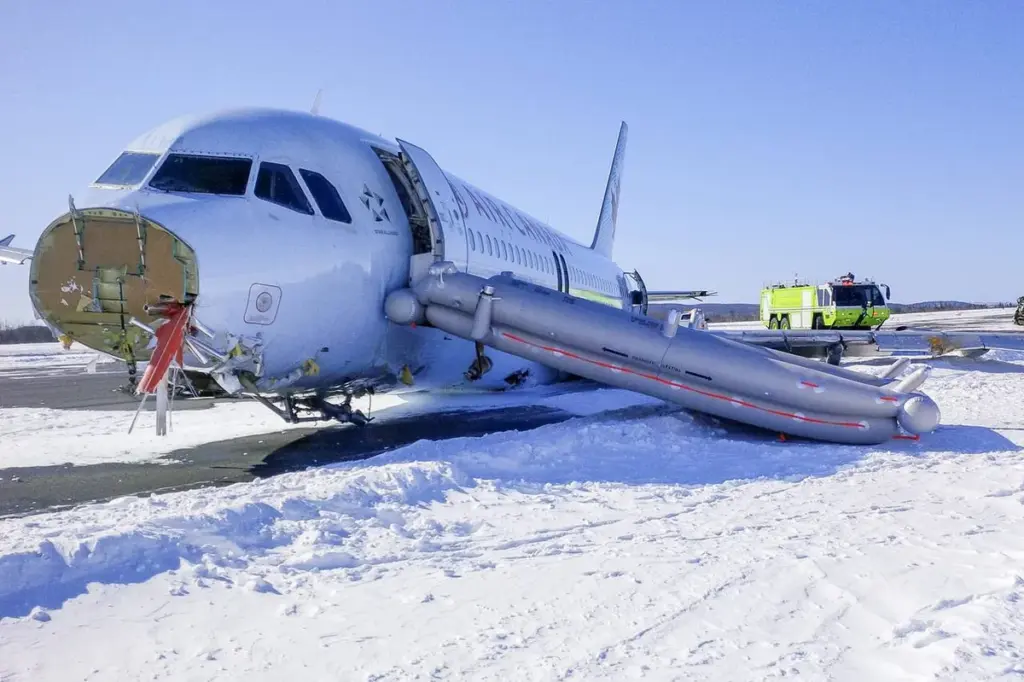
An Air Canada Express aircraft collided with a fire truck at LaGuardia Airport, leading to the deaths of the pilot and co-pilot. Two police officers were injured.
Before the tragic incident on March 22, 2026, expectations surrounding air travel safety at LaGuardia Airport were generally high. The airport had maintained a strong safety record, and passengers boarded their flights with confidence, trusting that protocols were in place to prevent accidents.
However, at approximately 11:40 p.m., a decisive moment shattered that confidence when an Air Canada Express aircraft, operated by Jazz Aviation, collided with a Port Authority Aircraft Rescue and Firefighting vehicle on Runway 4. The aircraft was traveling at around 30 mph at the time of the collision.
The immediate aftermath was devastating. The pilot and co-pilot of Flight 8646 were killed, while 72 passengers and four crew members on board faced an uncertain fate. Two Port Authority police officers responding to a separate incident were injured and taken to area hospitals.
The National Transportation Safety Board (NTSB) has initiated a thorough investigation into the crash, with the Federal Aviation Administration (FAA) also involved in examining the circumstances surrounding the incident. Visibility was reported to be about three miles with rain and mist at the time, which may have contributed to the confusion on the runway.
As the investigation unfolds, the focus is on understanding how such a collision could occur at a busy airport. The Aircraft Rescue and Firefighting vehicle was responding to an emergency when the accident happened, raising questions about communication and coordination protocols between ground services and flight operations.
Experts in aviation safety emphasize the importance of thorough investigations in incidents like this. “What caused the collision was not immediately clear. An investigation is ongoing,” a spokesperson noted, highlighting the complexities involved in air traffic management.
Details remain unconfirmed regarding the condition of the injured police officers and the exact cause of the collision. As the NTSB continues its work, the aviation community and the public await answers that could inform future safety measures.
This incident serves as a stark reminder of the inherent risks associated with air travel, even in seemingly routine operations. The loss of the flight crew and the injuries sustained by first responders underscore the critical importance of safety protocols in aviation.
As the investigation progresses, it is crucial for all stakeholders to reflect on the lessons learned from this tragedy to enhance safety and prevent similar occurrences in the future.