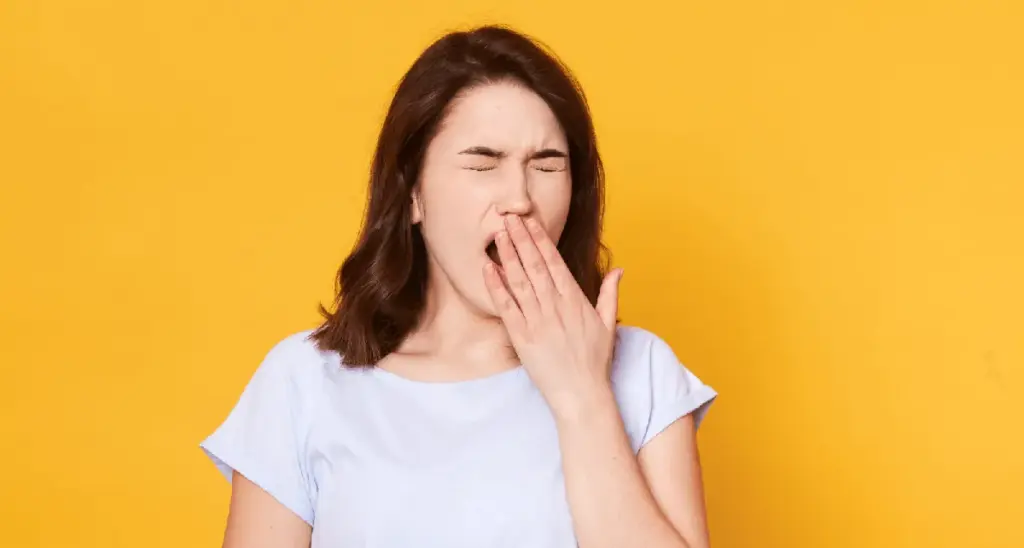
Recent studies reveal yawning’s potential role in brain regulation, reshaping our understanding of this common behavior.
“Yawning plays a role in cleaning brain fluid, which would most likely happen close to bedtime,” says Professor Lynn Bilston from the University of New South Wales. This statement challenges the traditional view of yawning as merely a sign of tiredness or boredom. Instead, it suggests that this seemingly mundane behavior may have deeper implications for how our brains function.
Yawning is not just a human phenomenon; it’s observed across many species, including reptiles like the Gaboon viper. These snakes, known for their impressive two-inch fangs—the longest of any venomous snake—yawn to realign their jaws after eating. This behavior reflects a practical need, but it also raises questions about the evolutionary significance of yawning in general.
That context matters because recent studies indicate that yawning might help regulate brain temperature and facilitate the flow of cerebrospinal fluid (CSF). Researchers found that yawning signatures vary from person to person—”It’s almost like a fingerprint, so you could possibly identify someone just based on how they yawn,” explains Adam Martinac, a fellow researcher. This uniqueness adds an intriguing layer to our understanding of yawning behavior.
Moreover, yawning is considered a primordial process preserved throughout evolution. It has survived the test of time, suggesting that it serves essential functions beyond mere fatigue relief. The implications for neuroscience are profound; if yawning plays a role in brain regulation as suggested, we may need to rethink how we view this everyday act.
In essence, yawning could be much more than an involuntary reflex. It may serve as an essential mechanism for maintaining cognitive function and overall brain health. As research continues to unfold, scientists are keen to explore what these findings mean for our understanding of both human and animal behavior.
While much remains to be understood about the full scope of yawning’s functions, one thing is clear: it is intertwined with our neurological health and evolutionary history. The Gaboon viper’s jaw realignment may seem far removed from human experiences, yet both species share this curious behavior that hints at deeper biological processes at play.