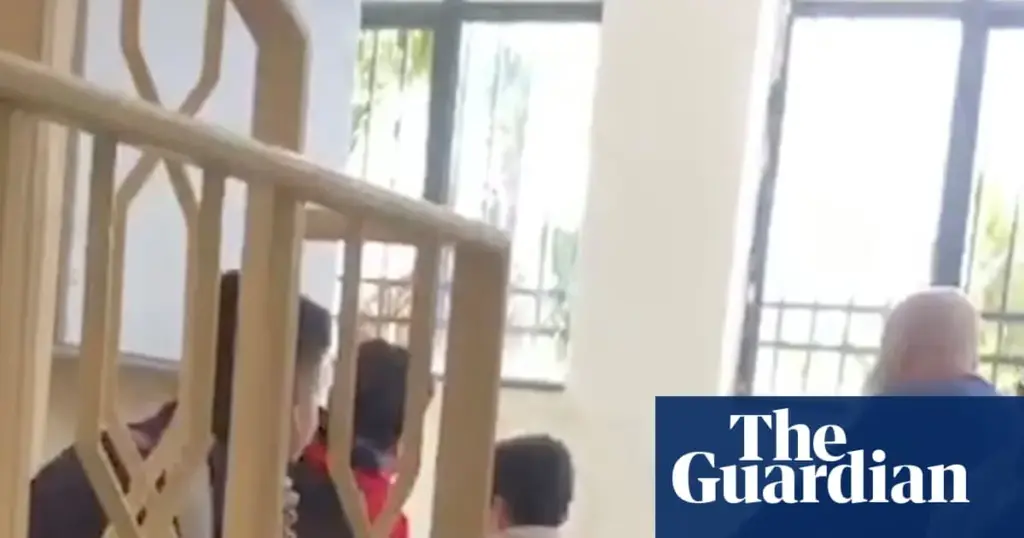
The recent shooting of a 14-year-old boy outside his school underscores the alarming rise in violence against Palestinian education in the occupied West Bank.
The shooting of Aws al-Naasan, a 14-year-old boy, outside his school in Mughayyir village on April 21, 2026, starkly illustrates the escalating violence against Palestinian education in the occupied West Bank. This incident is not isolated; it reflects a broader trend of settler violence targeting schools and students.
That context matters because it reveals how deeply entrenched this violence has become. Aws was shot in the head by an Israeli reservist while attending ninth grade at the Mughayyir boys’ secondary school. Following this tragic event, classes were suspended for a week, affecting not only Aws’s classmates but also the entire community’s sense of safety.
Key facts:
- Aws was shot amid a wave of settler violence that has increasingly targeted educational institutions.
- Just after Aws’s death, Israeli settlers attacked and demolished a British- and European-funded school for Palestinian children.
- The UN reports that Israeli military actions have resulted in at least 792 teachers and over 18,639 students killed in Gaza.
But what drives this cycle of violence? Reports indicate that Israeli forces often disrupt education by setting up checkpoints that intimidate students. Furthermore, residents like Tariq Hathaleen emphasize that roads are more than mere pathways; they are lifelines connecting children to their education and normal life. The psychological toll on students is immense, as expressed by Ahmed Abu Ali, a friend of Aws: “We want to go back to school, but our families are worried.”
Such incidents are part of a disturbing pattern. James Elder from UNICEF states, “These attacks on the education of Palestinian children are not isolated incidents.” They form part of an ongoing strategy that many view as ethnic cleansing—systematically erasing Palestinian identity through targeted attacks on their educational infrastructure.
As tensions continue to rise, uncertainties linger regarding future developments. The Israeli military has yet to clarify its strategy moving forward, and local communities remain on high alert for further attacks. Residents fear that without significant intervention or change in policy, the cycle of violence will persist unabated.