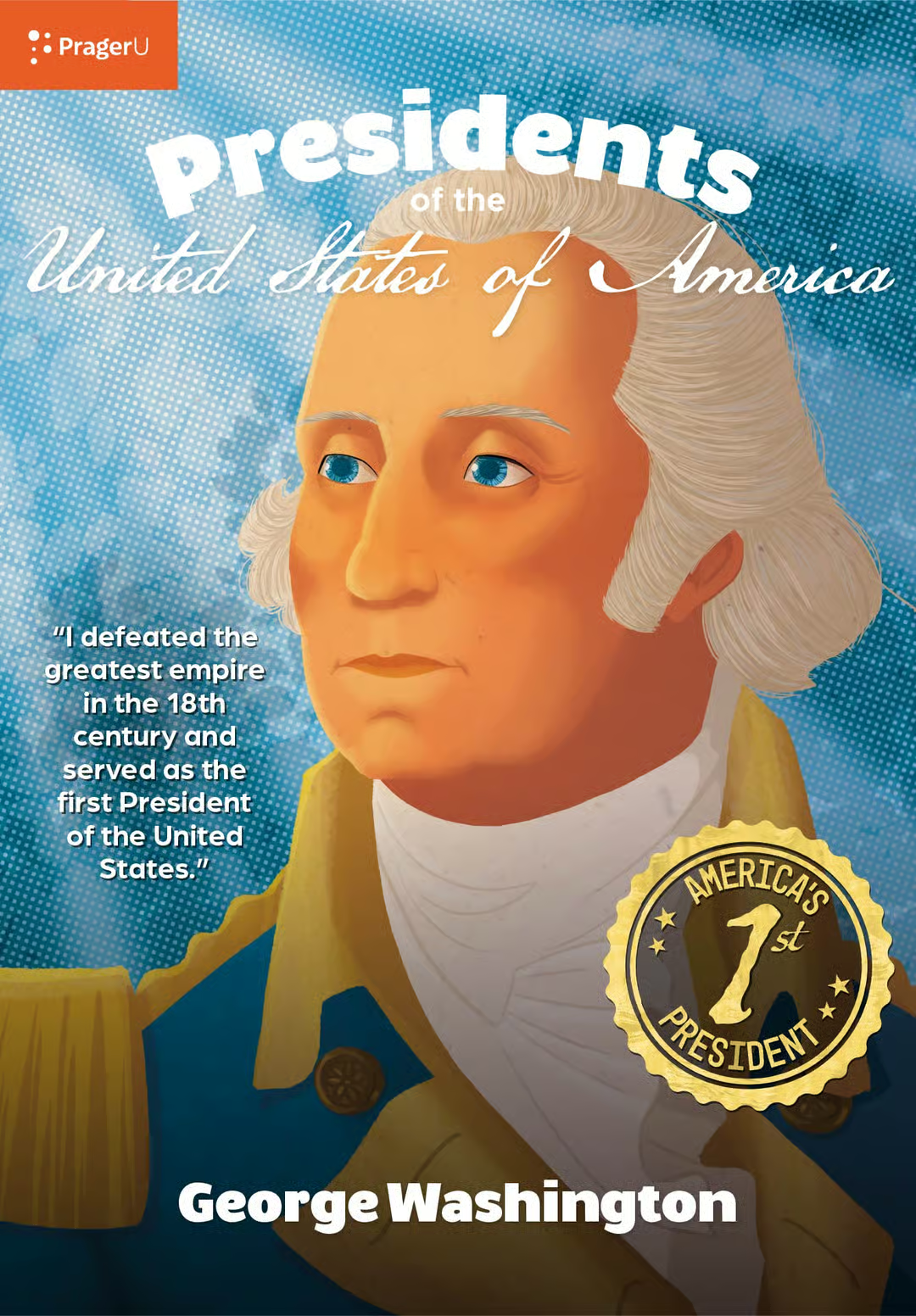
Introduction George Washington is often referred to as the “Father of His Country” due to his pivotal role in the founding of the United States. As the first president and a leader during the American Revolution, his influence is still seen in modern American politics and culture. Understanding Washington’s life and achievements is crucial for
Introduction
George Washington is often referred to as the “Father of His Country” due to his pivotal role in the founding of the United States. As the first president and a leader during the American Revolution, his influence is still seen in modern American politics and culture. Understanding Washington’s life and achievements is crucial for appreciating the foundations of democracy in the United States.
Early Life and Military Career
Born on February 22, 1732, in Westmoreland County, Virginia, Washington grew up in a plantation family. He acquired various skills, including surveying, which later helped him in his military career. His involvement in the French and Indian War sharpened his leadership abilities and garnered respect, eventually leading to his appointment as Commander-in-Chief of the Continental Army during the American Revolution.
Leadership in the American Revolution
Washington’s leadership was instrumental in the fight for independence from British rule. His strategies, including the surprise attack on Trenton after crossing the Delaware River, showcased his tactical genius. Under his command, the Continental Army suffered hardships but eventually secured a pivotal victory at Yorktown in 1781, leading to the end of the war and American independence.
Presidency and Legacy
Following the war, Washington presided over the Constitutional Convention of 1787, where the U.S. Constitution was drafted. He became the nation’s first president in 1789, serving two terms until 1797. Washington set many precedents, such as the formation of a cabinet and the tradition of a peaceful transition of power. He emphasized the importance of unity and warned against political parties in his farewell address.
Conclusion
George Washington’s legacy is far-reaching, embodying the values of leadership, sacrifice, and unity. His influence is commemorated in countless ways—from monuments and holidays to his portrayal as a symbol of democracy. As America continues to evolve, Washington’s principles serve as a foundation for the nation’s governance and identity, highlighting the significance of his contributions to American history. Understanding his life encourages reflection on the tenets of leadership and the spirit of independence that shaped the United States.