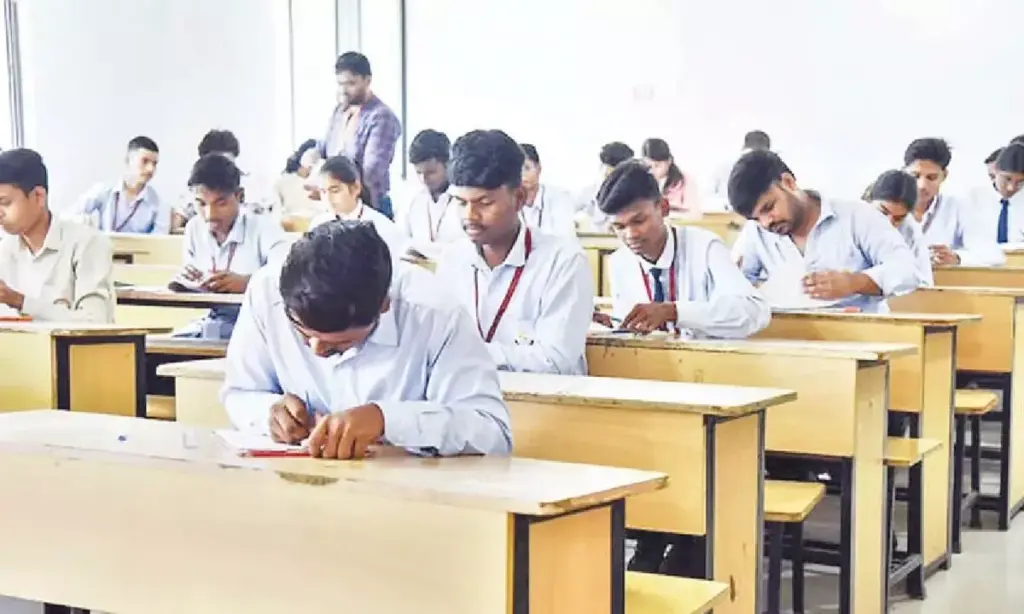
The Karnataka government has proposed a new grading system for third language subjects in the SSLC examination, set to begin in the 2025-26 academic year.
The Karnataka government has announced a significant change to the SSLC examination, introducing a grading system for third language subjects starting in the 2025-26 academic year. This new approach aims to alleviate academic pressure on students while promoting skill-based and language learning.
Under the proposed system, students will receive grades instead of traditional marks for their performance in third language and National Skills Qualifications Framework (NSQF) subjects. The grading scale will be as follows: an ‘A’ for scores between 80% and 100%, a ‘B’ for scores from 50% to 79%, and a ‘C’ for scores up to 49%.
Importantly, these third language and NSQF subjects will be categorized as additional subjects on the marks card, meaning they will not impact a student’s pass or fail status. The overall structure of the SSLC examination will remain unchanged, with six core subjects still carrying a total of 625 marks.
The notification regarding this grading proposal is currently in draft form and is open for public objections and suggestions for a period of seven days. This move reflects the Karnataka government’s commitment to enhancing the educational experience and reducing the stress associated with examinations.
Historically, the SSLC examination has been a crucial milestone for students in Karnataka, often determining their future educational paths. The introduction of a grading system for additional subjects marks a notable shift in how student performance is assessed.
As the public review period unfolds, stakeholders in the education sector are keenly observing the reactions from students, parents, and educators. The government aims to finalize the proposal based on the feedback received, which could lead to further adjustments in the grading framework.
Details remain unconfirmed regarding the specific implementation processes and any potential adjustments that may arise from public feedback. However, the overarching goal is clear: to create a more supportive and less stressful academic environment for students in Karnataka.