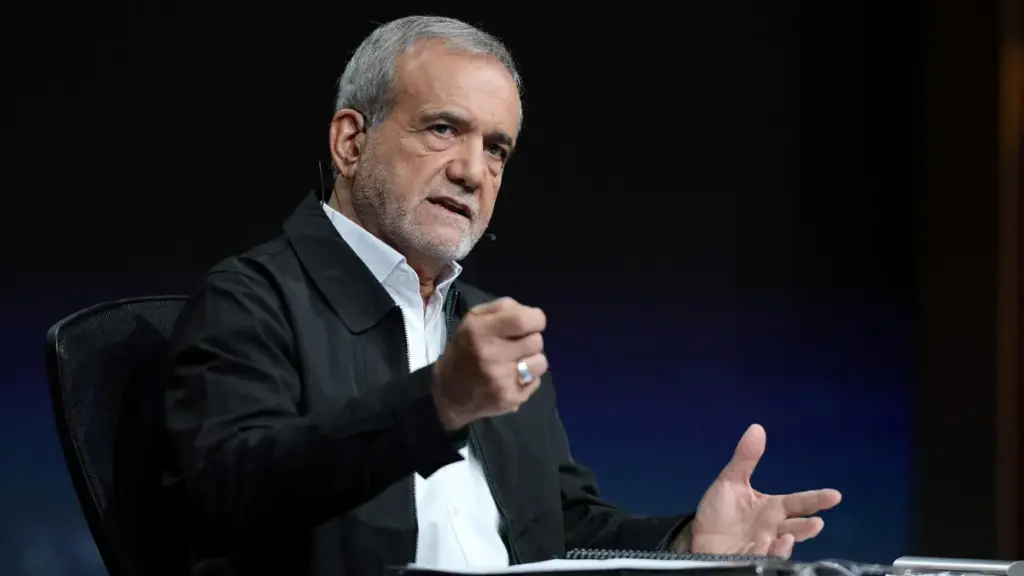
Iranian President Masoud Pezeshkian has made significant statements regarding recent military actions and the future of regional diplomacy.
Iranian President’s Apology and Diplomatic Intentions
On March 8, 2026, Iranian President Masoud Pezeshkian publicly apologized to neighboring countries for recent military strikes, emphasizing that Iran has no intention of invading other nations unless provoked. This statement comes in the wake of escalating tensions in the region, particularly following a series of airstrikes attributed to Iran’s Revolutionary Guards on US air combat centers.
Immediate Context and Reactions
Pezeshkian’s remarks were made during a press conference where he stated, “I apologise to the neighbouring countries. We have no intention of invading other countries.” His comments were partially amended after backlash from hardliners within Iran, including criticism from Iran’s judiciary chief, Gholam Hossein Mohseni-Ejei, who labeled Pezeshkian’s apology as unprofessional and weak. The Parliament speaker, Mohammad Bagher Ghalibaf, also weighed in, asserting that the presence of US military bases in the region obstructs peace.
Escalating Conflict and Casualties
The backdrop to Pezeshkian’s statements includes a significant increase in military actions. Reports indicate that over 3,000 strikes have been conducted on targets inside Iran during the first week of Operation Epic Fury, with Iranian officials confirming at least 1,230 deaths due to the ongoing conflict. Furthermore, Iran’s UN ambassador reported that 1,332 Iranian civilians have been killed in US-Israeli air strikes, underscoring the human cost of the escalating hostilities.
Diplomatic Aspirations Amidst Tensions
Despite the ongoing violence, Pezeshkian expressed a desire to resolve conflicts through diplomatic means. He dismissed former US President Donald Trump’s demand for unconditional surrender, stating, “That’s a dream that they should take to their grave.” This reflects a broader sentiment within Iran’s leadership to seek a path forward that avoids further military escalation.
Leadership Changes and Future Directions
The Iranian leadership council is currently overseeing the country following the death of Supreme Leader Ayatollah Ali Khamenei, which has led to a period of uncertainty and adjustment in Iran’s political landscape. As Pezeshkian navigates these challenges, the reactions from both domestic hardliners and international observers will likely shape the future of Iran’s diplomatic and military strategies.
Official Statements and Public Sentiment
As the situation develops, the Iranian public and political figures are closely monitoring Pezeshkian’s actions and statements. The mixed reactions to his apology and the ongoing military operations highlight a complex interplay between the desire for peace and the realities of regional security dynamics. Details remain unconfirmed regarding the full implications of these developments on Iran’s foreign relations.