England and Argentina renew their historic football rivalry in a World Cup semifinal clash in Atlanta. Lionel Messi faces England for the first time as Argentin
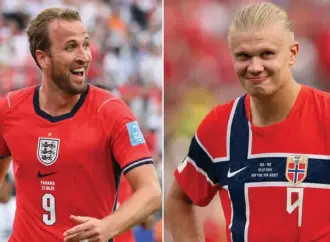
The long-standing football rivalry between England and Argentina is set to be renewed on Wednesday in Atlanta, as the two nations face off in a World Cup semifinal. This encounter marks the first time Lionel Messi will play against England in his career. The match will see the defending world champions, Argentina, attempt to stop Thomas Tuchel‘s Three Lions, who are aiming to end a significant period without a major trophy.
The rivalry between these two footballing powerhouses extends back generations, characterised by memorable goals, controversies, and red cards. Beyond the pitch, political tensions, particularly stemming from the Falklands War in the 1980s, have also influenced the relationship between the two countries. Argentina players and fans continue to reference this conflict in football chants, even during the current World Cup.
A History of Intense Encounters
Despite the intensity of the rivalry, England holds a slight edge in World Cup matches between the two sides, having won more of their five encounters. However, it has been some time since England secured a victory in a truly high-stakes game against Argentina. The last World Cup meeting between the two nations occurred in 2002, meaning many younger fans may not recall the historical context of this fierce competition.
The first World Cup clash between England and Argentina took place in 1962 in Rancagua, Chile, during the group stage. England secured a 3-1 victory with goals from Ron Flowers, Bobby Charlton, and Jimmy Greaves, while Argentina managed a late consolation goal. Both teams finished the group stage with similar records, but England advanced to the quarter-finals due to a superior goal difference, where they were subsequently eliminated by Brazil.
The rivalry intensified significantly in 1966 when the teams met in the quarter-finals at Wembley, England. This match, which Argentina still claims was marred by officiating errors, saw Geoff Hurst score the winning goal, which Argentina maintains was offside. The game was highly contentious, with Argentina captain Antonio Rattin sent off after 33 minutes for two offences. His refusal to leave the pitch led to an eight-minute delay. England manager Alf Ramsey controversially described the Argentine side as ‘animals’ after the match and reportedly prevented his players from exchanging shirts.
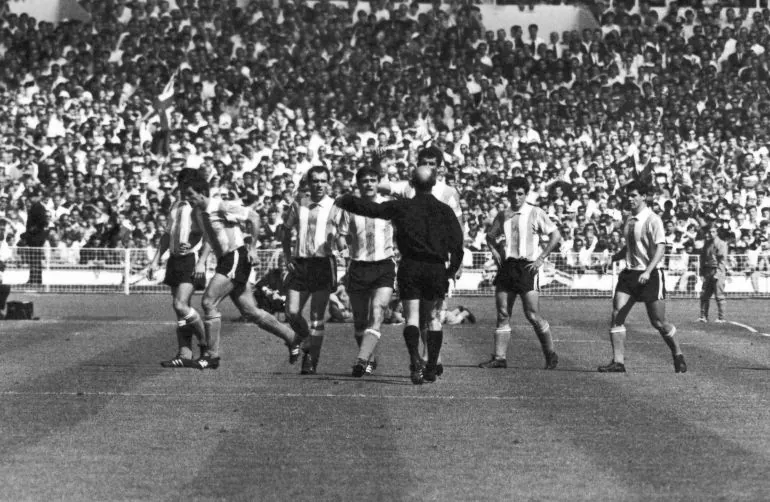
This particular match is also credited with influencing the introduction of red and yellow cards in football, which were first implemented in the 1970 World Cup. Prior to this, referees relied solely on verbal warnings. Rattin, who played for Argentina from 1959 to 1969 and participated in the 1962 and 1966 World Cups, passed away at the age of 89 on Saturday, just hours before Argentina‘s quarter-final victory over Switzerland, where players wore black armbands in his honour.
The Hand of God and Beyond
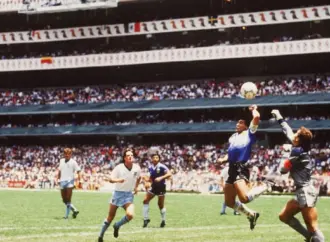
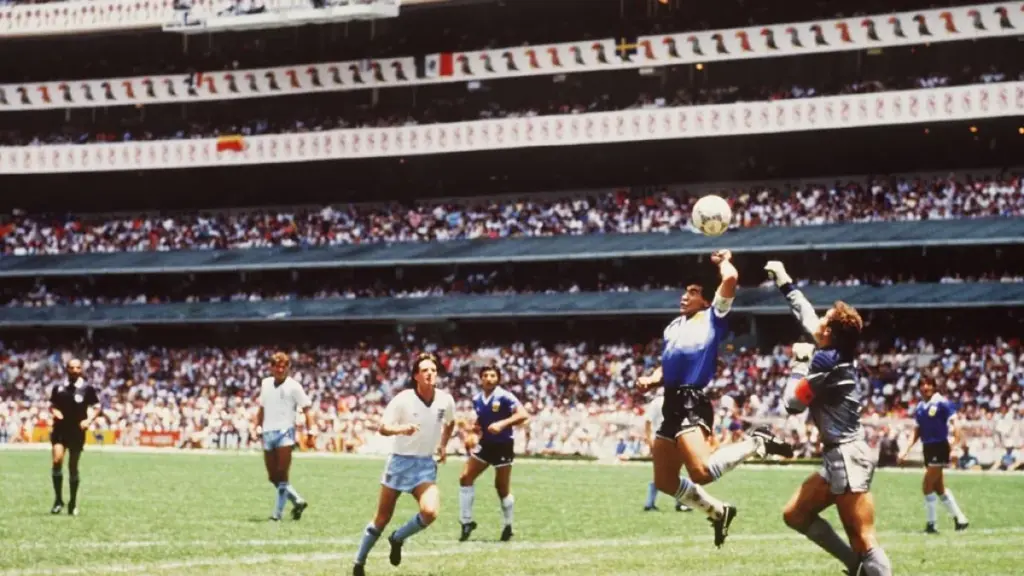
The 1986 World Cup quarter-final in Mexico City is perhaps the most iconic and controversial encounter between the two nations. Played just four years after the Falklands War, the match was imbued with significant political tension. Diego Maradona scored two memorable goals for Argentina. The first, famously known as the ‘Hand of God‘, saw Maradona punch the ball past England goalkeeper Peter Shilton. Four minutes later, he scored what is widely considered one of the greatest World Cup goals of all time, dribbling past multiple England players before finding the net.
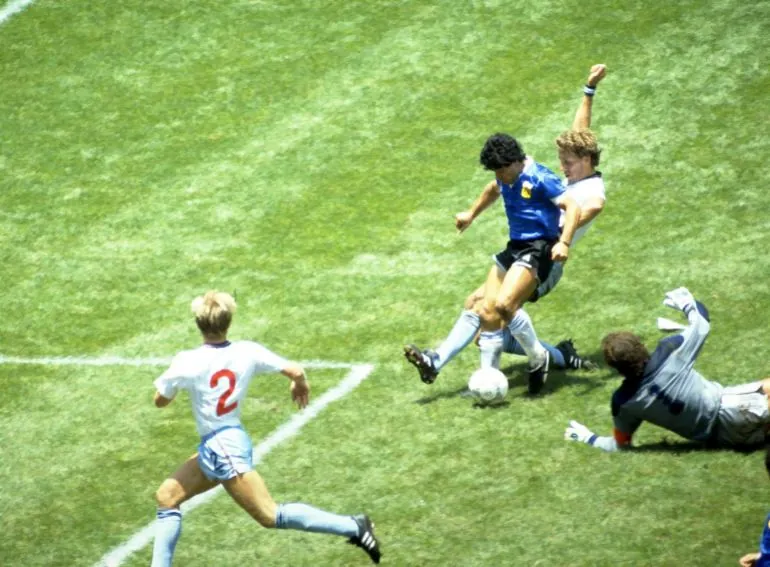
Gary Lineker scored a late goal for England, but it was not enough to prevent Argentina‘s 2-1 victory. Argentina went on to win the World Cup that year, defeating West Germany in the final. Maradona did not apologise for the ‘Hand of God‘ until 2005, an apology that Shilton reportedly rejected.
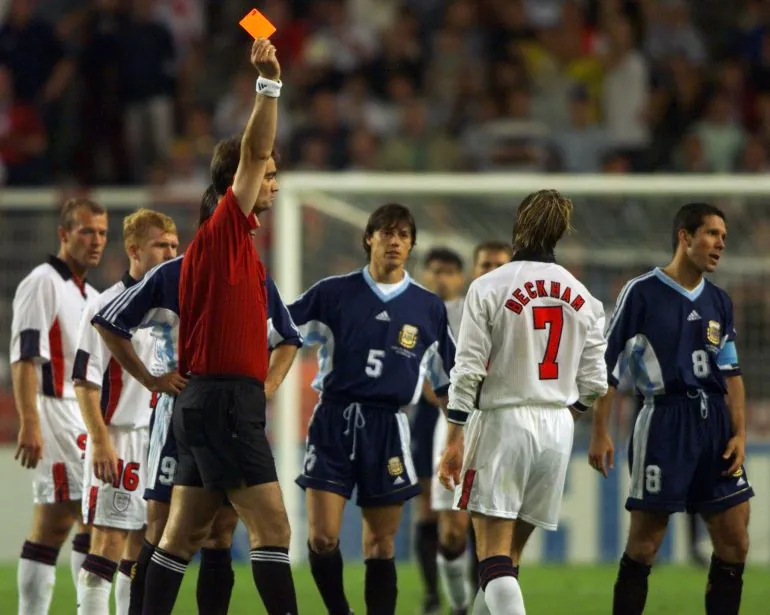
The rivalry continued in the 1998 World Cup last 16 in St Etienne, France, a match remembered for David Beckham‘s red card. Beckham was sent off after kicking out at Diego Simeone. Earlier in the game, Gabriel Batistuta and Alan Shearer had exchanged penalties, and Michael Owen scored a spectacular solo goal to give England a 2-1 lead. Javier Zanetti then equalised for Argentina from a clever free-kick. Despite playing with 10 men, England thought they had won when Sol Campbell headed in, but the goal was disallowed for a push. Argentina ultimately won the penalty shootout 4-3 after misses by David Batty and Paul Ince.
The most recent World Cup meeting occurred in 2002 in Sapporo, Japan, during the group stage. This match offered Beckham a chance for redemption, and he scored the only goal from a penalty after Michael Owen was fouled by Mauricio Pochettino. This crucial 1-0 victory helped England progress from the group stage, while Argentina, who had drawn their final group match, were eliminated before the knockout rounds for the first time since 1962. England went on to beat Denmark in the last 16 before being knocked out by Brazil in the quarter-finals.
The upcoming semifinal in Atlanta will be the first encounter between the two national teams in 21 years, with their last meeting being a friendly in Geneva in 2005, which England won 3-2.
Read Also
Source: bbc.com