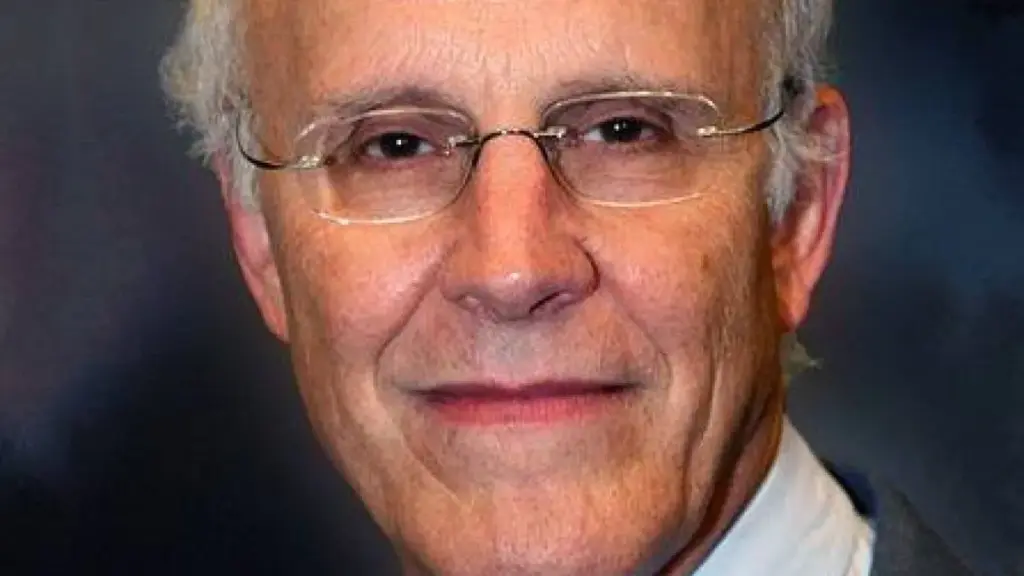
David Gross, a Nobel laureate in Physics, has made significant contributions to our understanding of fundamental forces, yet he warns of dire risks ahead.
David Gross, renowned for his groundbreaking work in theoretical physics, has recently raised alarms about humanity’s future. He won the Nobel Prize in Physics in 2004 for discovering asymptotic freedom—a concept that describes how the force between quarks weakens as they get closer together. This discovery was pivotal in completing the Standard Model of particle physics. Now, with a $3 million Special Breakthrough Prize under his belt, Gross is not just contemplating the universe but also its precarious fate.
Asymptotic freedom is a complex idea, yet its implications are profound. Imagine if the stronger a bond becomes when two people are near each other—this is akin to how quarks behave at short distances. The laws of nature that govern these particles have been crucial to our understanding of the universe. But what about the laws governing human existence? Here’s where Gross’s concerns come into play.
Gross believes that humanity may not survive the next 50 years due to an increasing risk of nuclear war. He estimates a 2% chance of nuclear conflict each year, which translates to an expected lifetime for humanity of about 35 years. “The chances of you living 50 years are very small,” he states bluntly. This stark prediction is not merely hyperbole; it underscores the urgency with which we must address global tensions.
That context matters because it highlights a troubling reality: there are currently nine nuclear powers worldwide. Each one adds complexity and unpredictability to international relations—compounding the risk of conflict. Gross argues that we are entering an incredible arms race. With nations modernizing their arsenals and geopolitical tensions simmering, the situation becomes more precarious by the day.
But why focus on such dire predictions from a physicist? It’s essential because Gross’s insights stem from a deep understanding of complex systems, both in physics and human behavior. His warnings serve as a call to action for policymakers and citizens alike. Without addressing these risks head-on, we may find ourselves at the mercy of forces we cannot control.
The historical context here cannot be overlooked either. The Cold War era brought us to the brink of nuclear annihilation; today’s landscape feels eerily similar. As nations grapple with issues like climate change and resource scarcity, they may resort to desperate measures—potentially leading to catastrophic outcomes.
As observers look ahead, questions loom large: Can we avert this crisis? Are there pathways to reduce nuclear arsenals? The dialogue around disarmament is more critical now than ever before. Yet despite these discussions, details remain unconfirmed regarding any substantial progress toward peace.
In summary, David Gross’s work extends beyond theoretical physics; it raises essential questions about our survival as a species. His contributions have illuminated fundamental forces of nature while simultaneously casting light on our vulnerabilities as human beings. As we navigate this uncertain future, his warnings should inspire urgent conversations about peace and security across the globe.